Match the Moving Door
Consider the door leaves and drive together. Glass, framing and attachment details affect the moving load.

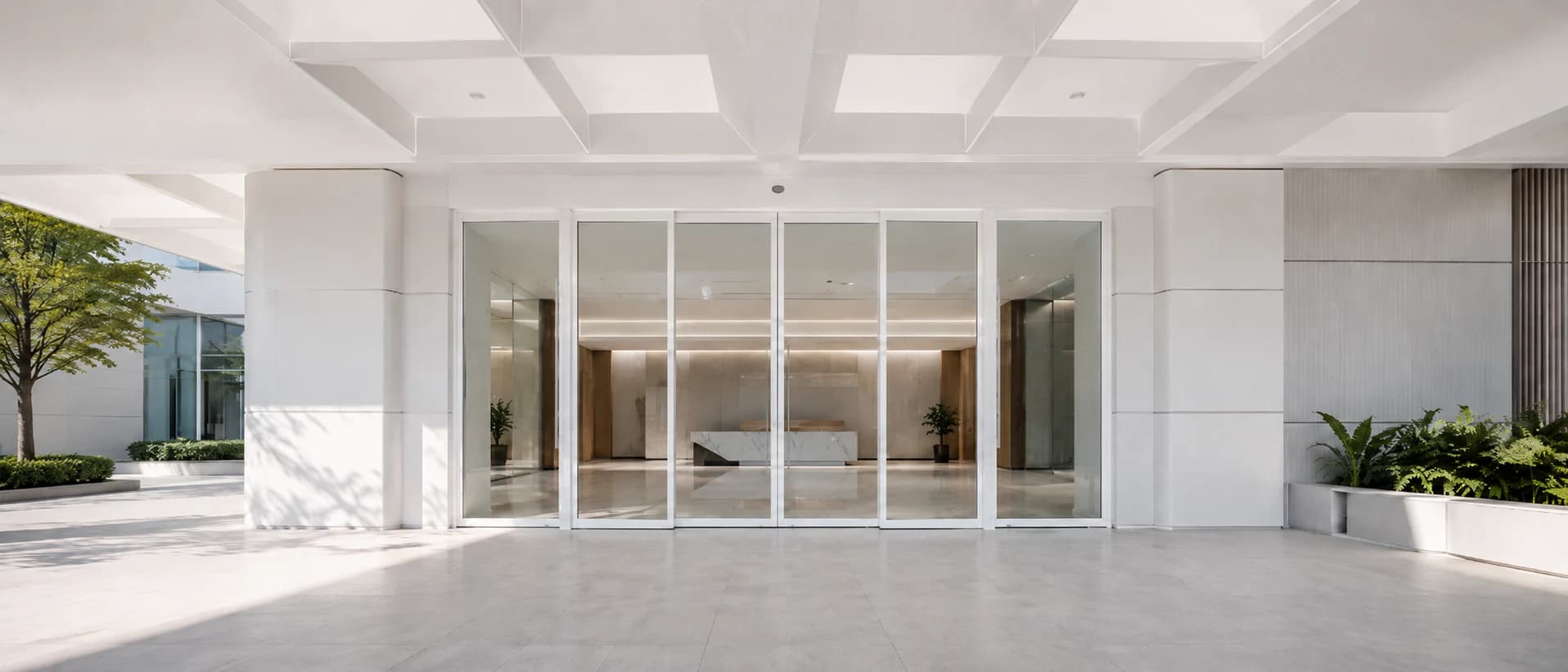
Complete Doors · Project Configuration
SEPPES supplies complete automatic sliding doors configured around your opening, door construction and operating requirements. The operator, sensing, controls and mechanical hardware are coordinated as part of the same entrance.
The Complete Entrance
An automatic sliding door system brings together the door leaves, powered drive, sensing and control logic. Each part needs to work with the opening and the way the entrance will be used.
For a new project, SEPPES configures and supplies the complete door. We review the door construction and system requirements together, with the final specification developed around your project.
Explore Complete Sliding Glass Doors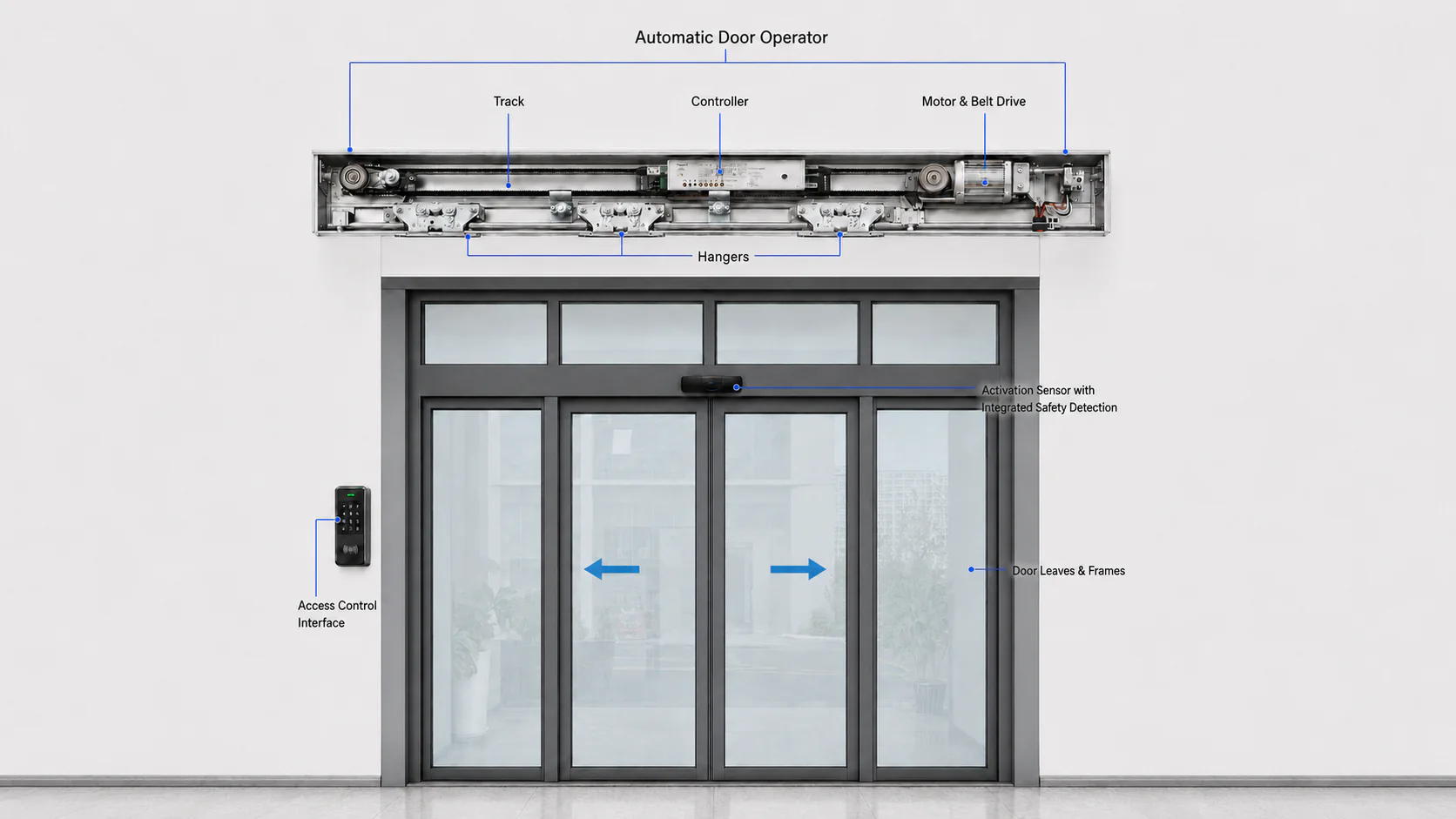
Inside the Header
The operator brings drive, control and guided movement into the header assembly. Its arrangement follows the door weight, travel and installation conditions.
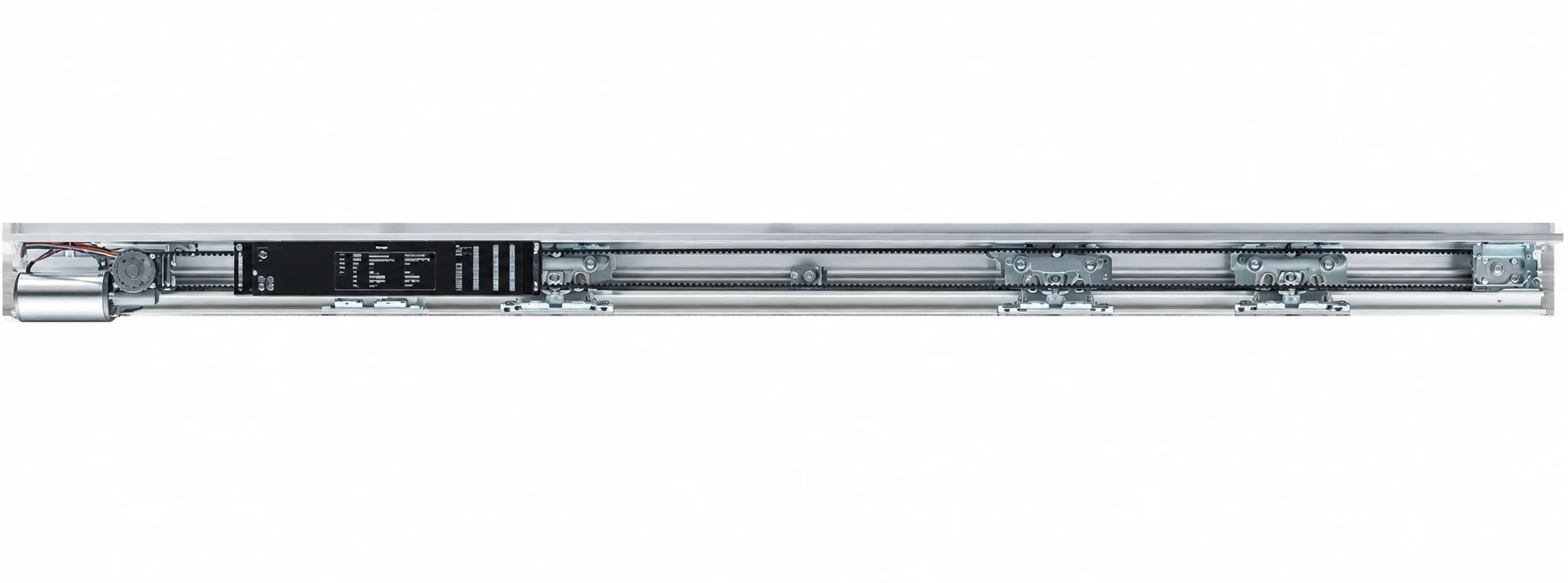
Consider the door leaves and drive together. Glass, framing and attachment details affect the moving load.
Review the mounting surface, panel travel and space around the operator before confirming the arrangement.
Allow the operator cover and relevant components to remain accessible for inspection and future servicing. Review interfaces and support in the Automatic Door Operator guide.
System Components
Use these groups to understand the configuration under discussion. Individual components and accessory choices are confirmed with the complete door scope.
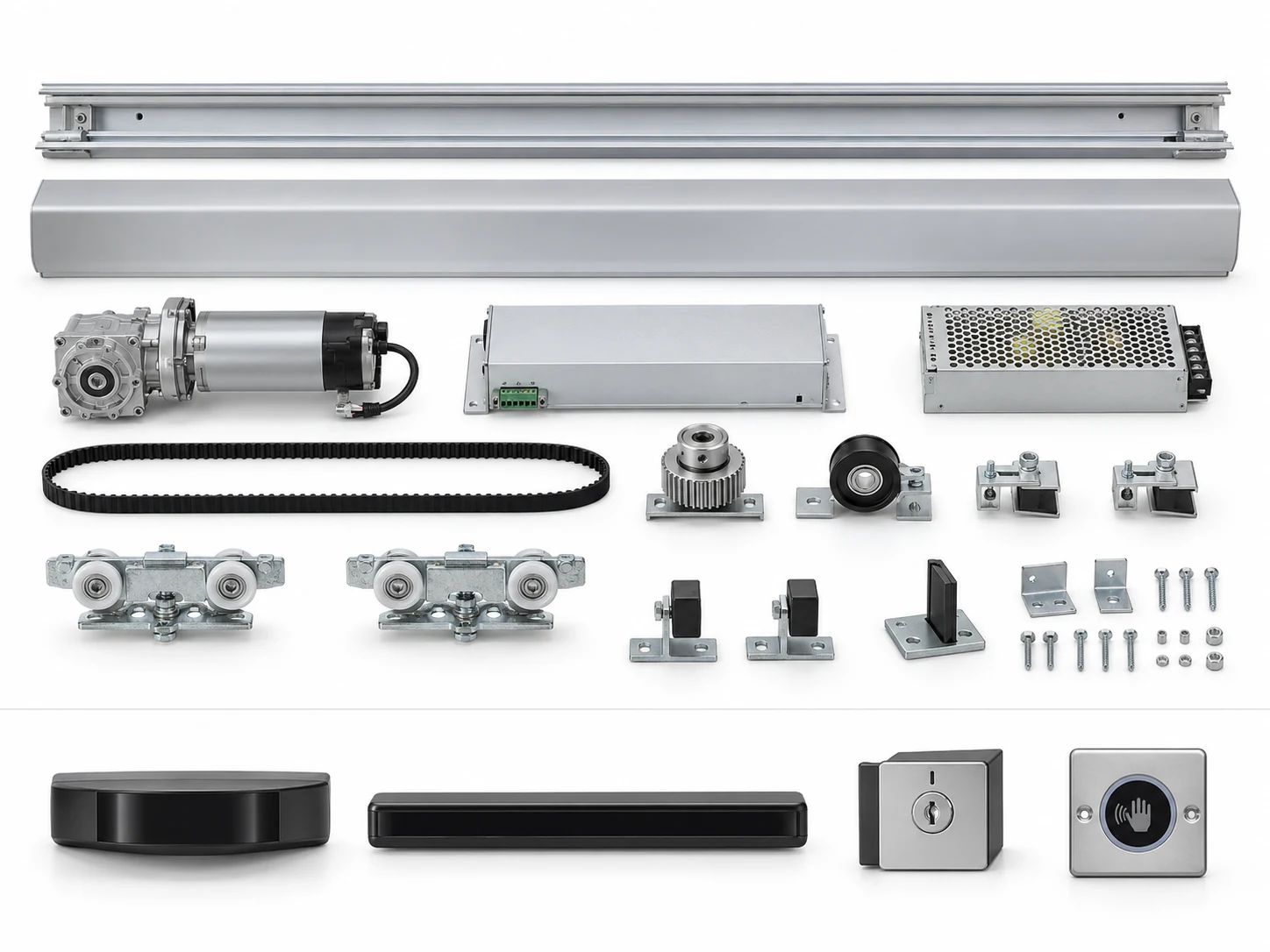
The motor and transmission move the door leaves. Review the drive together with the leaf weight, travel distance and expected use, so the complete entrance can be configured around its operating needs.
The rail and hanger hardware support guided movement. Their arrangement depends on the door construction, panel travel and mounting structure. Allow space for both installation and later service access.
The controller coordinates opening requests, timing, operating modes and detection inputs. Power preparation and the required control interfaces are part of the project review.
Activation requests opening; presence detection monitors relevant doorway areas. These are separate functions even when one sensor assembly combines them. Device positions follow the entrance layout.
A push button, mode selector or access-control signal may form part of the agreed configuration. Define who can enter, when access is permitted and how the door should respond.
Glass, frames, fixed panels, lower guidance and seals complete the physical entrance. Their weight and connection details need to be coordinated with the operator and surrounding construction.
Configured to Your Project
Your project details guide the configuration. Begin with the opening and door construction, then coordinate the operating and installation requirements.
Share the clear opening you need, overall opening dimensions and available side space. Single-sliding, bi-parting and telescopic arrangements need different movement and hardware reviews.
Useful starting informationOpening sketch, side-space dimensions and preferred movement.
Glass and frame choices affect the moving mass and attachment details. If door weight is not yet known, provide the proposed dimensions and construction for review.
Useful starting informationLeaf dimensions, glass specification and frame direction.
The fixing surface, header depth, adjacent ceiling and service access affect the operator arrangement. Existing entrances also need their current condition reviewed.
Useful starting informationElevation, header detail or clear site photographs.
Describe pedestrian traffic, opening requests, controlled-access periods and any special operating needs. Sensing, locking and control responses are then considered together.
Useful starting informationBuilding use, access requirements and intended operating modes.
For access control, tell us which equipment will request entry and how the door should behave during normal and restricted use. Emergency Opening and Manual Release can be reviewed for the applicable configuration. Required accessories, interfaces and power-loss behavior are confirmed with the project.
For activation, presence and mounting inputs, review the Sliding Door Sensor Configuration guide.
Early Planning
Use these common sliding-door ranges to frame the initial discussion. They are reference information, not a fixed SEPPES model specification.
These figures are general planning references. Final specifications and supplied components are confirmed for each customized project. The ranges describe different possible configurations; their maximum values should not be combined as one system specification.
| Parameter | Reference Range / Option | Configuration Notes |
|---|---|---|
| Clear opening width | 700–3,000 mm | General sliding-door reference; review with opening arrangement and side space. |
| Opening height | 2,000–3,000 mm | Confirm with glass, frame, mounting and project requirements. |
| Door-leaf weight | 100–200 kg per leaf | Reference capacity band across configurations; the selected drive and hardware determine the final limit. |
| Opening / closing speed | 100–700 / 100–600 mm/s | Reference adjustment ranges; settings depend on the complete configuration. |
| Hold-open time | 0–60 seconds | Confirm the available settings with the control configuration. |
| Power supply | AC 110–240 V, 50/60 Hz | Reference supply options; confirm the electrical version for the destination. |
| Installation direction | Concealed or surface-mounted | Subject to mounting structure, available space and service access. |
| Activation inputs | Sensor, push button or access control | Confirm the required devices, signal method and control logic. |
Header dimensions, rail length and connection details are developed with the opening and mounting conditions.
Complete Door Supply
The checklist below helps organize a complete-door proposal. The final components, quantities and responsibilities are confirmed in the project quotation and agreed drawings.
| Scope Area | Reference Items | What to Confirm |
|---|---|---|
| Door construction | Moving leaves, fixed panels where specified, frames or glass connections, guides and seals. | Opening arrangement, glass and finish; boundaries with surrounding construction. |
| Drive and mechanics | Operator, motor, transmission, track, hanger hardware and associated fixing components. | Door weight, travel, mounting details and the agreed hardware arrangement. |
| Control and sensing | Controller, power components, activation and presence-detection devices. | Device selection, monitored areas, positioning and operating response. |
| Project accessories | Mode selector, push button, locking or access-interface components where specified. | Which accessories are included, externally supplied or not required. |
| Site preparation | Mounting support, prepared power, adjacent building work and local installation arrangements. | Who provides each item and how it connects to the supplied door. |
Project accessories are included where agreed. Site preparation and local installation responsibilities should be recorded alongside the supplied door components.
Send dimensions, photographs, destination, quantity and the way people will use the door. Early sketches are useful even while details are being developed.
We review the door arrangement, operator, sensing and controls together, identifying the information needed to prepare a project quotation.
Agree the door construction, component scope, interfaces and drawing details before production. Record local preparation and installation responsibilities alongside the supply.
Production and packing follow the agreed project requirements. Online installation guidance, remote troubleshooting and replaceable spare parts support the supplied entrance.
For Existing Customers
Operator systems, components and accessories are generally supplied to existing customers as replacement, spare or repair parts after configuration review. Standalone requirements involving hundreds or thousands of sets can be discussed separately.
SEPPES Project SupportOnline installation guidance and remote troubleshooting are available. Local installation and on-site work are arranged within the project responsibilities.
Frequently Asked Questions
Practical answers for a new complete-door project or support for an existing SEPPES installation.
Our main focus is complete door supply. Operator systems, components and accessories are generally supplied to existing customers as replacement, spare or repair parts. Large-volume standalone requirements, such as hundreds or thousands of sets, can be discussed separately. Replacement compatibility is reviewed against the original configuration.
Start with the opening, door construction, installation space and operating requirements. SEPPES configures the complete door around those inputs rather than asking you to select a fixed catalog model. Share the information already available; unresolved details can be identified during review.
No. The table gives general planning ranges across possible configurations. The final dimensions, door-leaf capacity, speed, power supply and control options are confirmed for your project. A maximum in one row does not mean all other maximum values are available in the same configuration.
Include the required entry method and operating response in the project brief. The controller, sensing, locking and interfaces need to be reviewed together. Emergency Opening and Manual Release can be discussed for the applicable configuration; their operating logic and power-loss behavior are confirmed for the project.
Send the previous order or project reference, photographs of the door and relevant component, any available identification labels and a description of the issue. We can review the earlier supply configuration before confirming a replacement or operator package.
Opening width and height, site photographs or a drawing, the preferred door arrangement, glass or frame requirements, quantity and destination are useful starting points. Include access-control needs and the building's normal use where known. Final technical details can develop during the project discussion.
Discuss Your Entrance
Tell us about the opening, door construction and the way people will use the entrance. We can help develop the configuration and clarify the scope for a complete automatic sliding door quotation.
Useful starting points: opening dimensions, photographs or drawings, quantity, destination and any access-control needs. Existing customers requesting spares can include their previous order reference and component photographs.