Door Operator
The door operator houses or coordinates the powered mechanism that moves the entrance. Its selection must reflect the door type, door-leaf condition, usage requirements and the confirmed supply boundary.

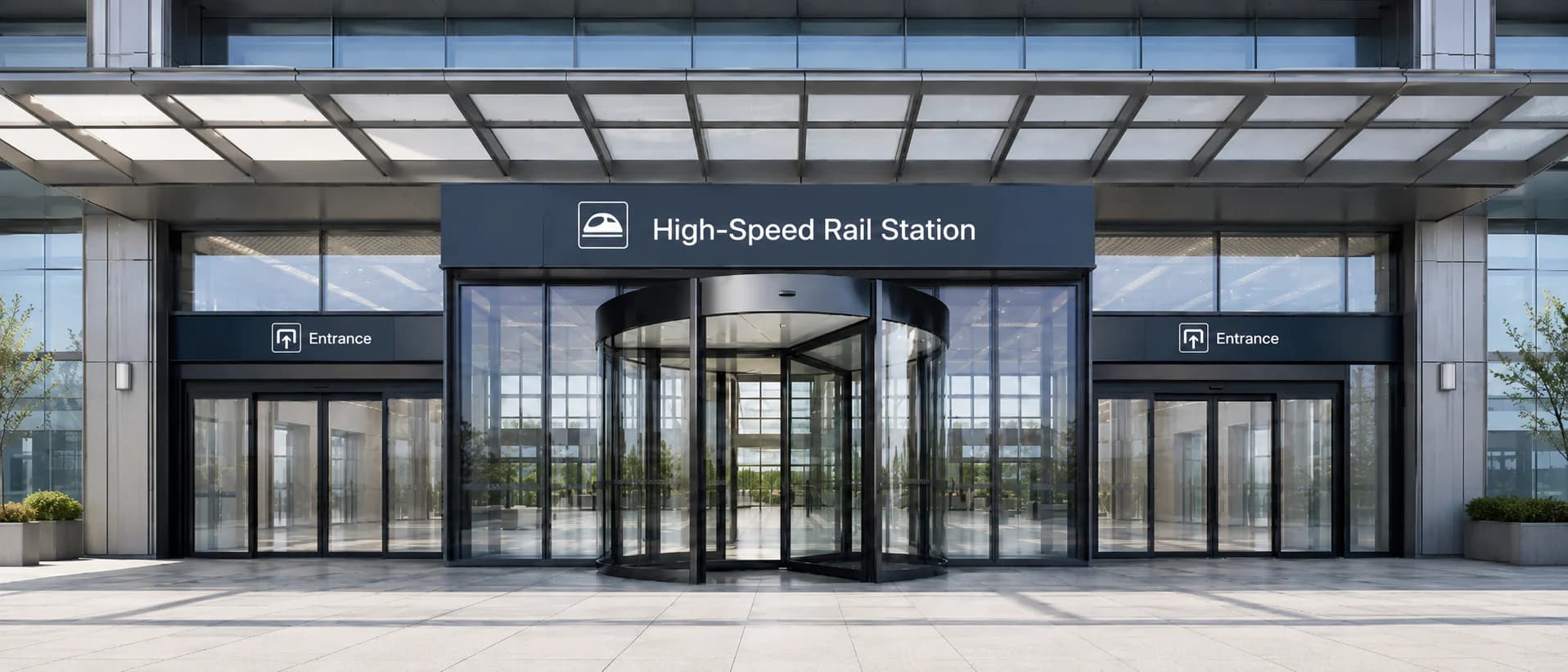
Door Systems & Integration
Coordinate the operator, controller, activation and safety sensors, access-control interface, door structure and installation conditions around one commercial entrance project. SEPPES prioritizes complete-door projects, with operator and component supply generally supporting existing customers’ replacement, spare-part and repair needs. Large standalone quantities can be discussed separately.
System Overview
An automatic door system is more than a motor that opens and closes a door. A usable entrance depends on coordinated activation, presence safety, control logic, drive components, the door structure and the surrounding building conditions.
The door operator is the powered assembly that moves the door. An automatic sliding door opener is a common buyer term for an opening package, but its exact supplied scope must still be confirmed. A complete automatic door system may extend beyond the operator to include sensors, controls, access interfaces, door leaves, frames, tracks, hardware and project-specific coordination.
The correct scope changes with the door family, opening size, door-leaf weight, pedestrian traffic, safety expectations, access method, installation environment and the responsibilities of the local contractor or installer.
Receives an opening request from motion detection, a push button, access control or another approved input.
Monitors the doorway and relevant movement areas so the control logic can respond to detected presence.
Processes operating modes, timing, safety inputs and approved access-control signals.
Transfers controlled movement through the operator, motor, transmission and door-family-specific mechanism.
Connects the moving door, fixed structure, opening and surrounding construction into a workable entrance.
Component Coordination
The component arrangement below uses an automatic sliding door system as the main visual example. It shows how an operator, controller, sensors, track hardware, door leaves and access interfaces work as coordinated parts of one entrance. Automatic revolving doors use a different mechanical structure and are explained separately below.
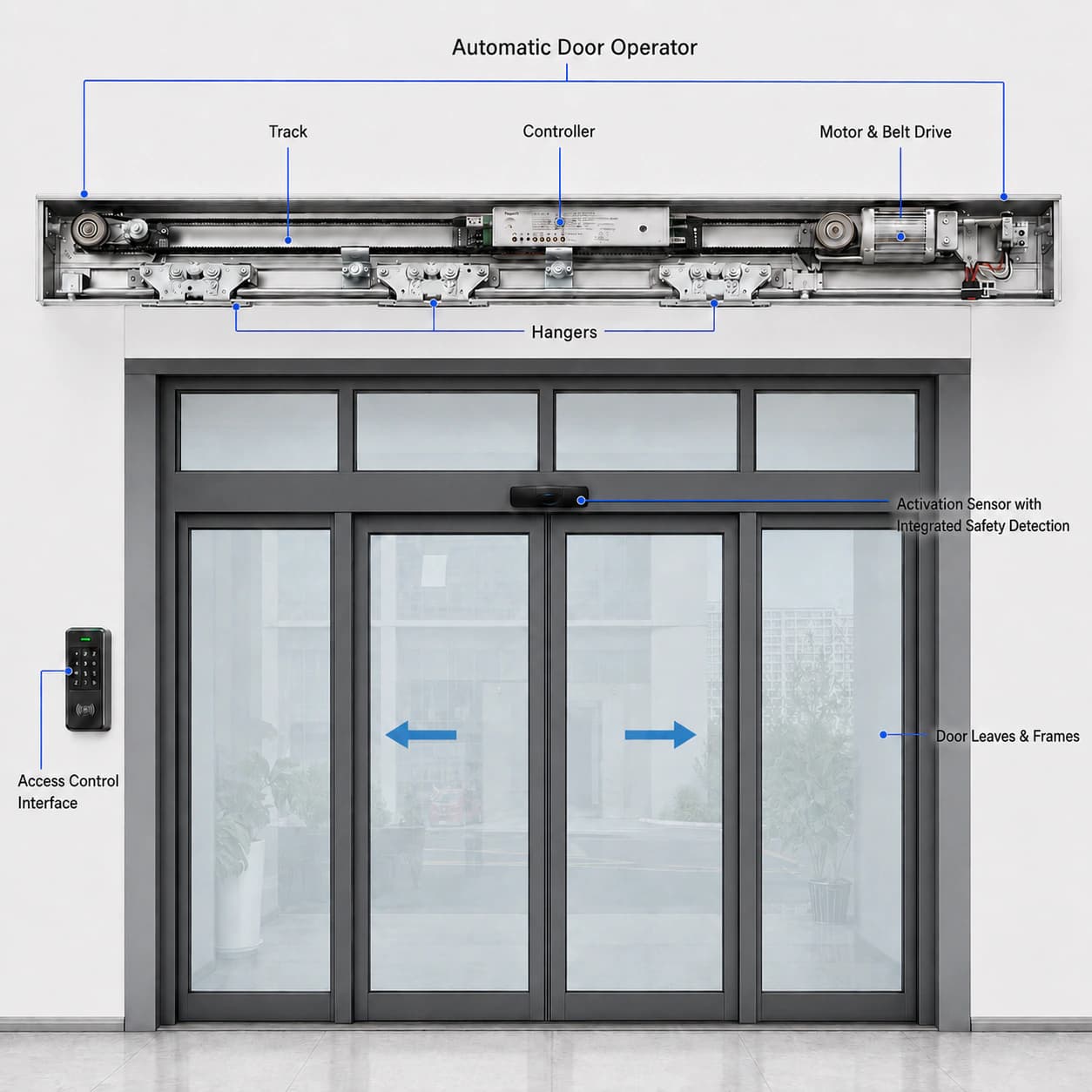
The door operator houses or coordinates the powered mechanism that moves the entrance. Its selection must reflect the door type, door-leaf condition, usage requirements and the confirmed supply boundary.
The motor provides controlled movement through the system drive. Motor selection cannot be separated from door weight, mechanical resistance, operating frequency and the complete operator design.
The automatic door controller processes activation, safety and operating inputs. It coordinates opening and closing behavior, but available functions and interfaces must be verified for the selected system.
In an automatic sliding door system, the track provides the guided path for the moving door leaves. Track length, mounting and alignment depend on the opening and required panel travel.
Hangers connect sliding door leaves to the moving mechanism and support guided travel along the track. Their use and arrangement are specific to the sliding-door structure.
The activation sensor detects an approved opening request, commonly from approaching pedestrian traffic. Detection method and coverage must be coordinated with the entrance layout and operating intent.
The safety or presence sensor monitors relevant doorway areas to support safer movement. Activation and presence safety are separate functions even when they are combined within one sensor assembly.
The access-control interface allows an approved external system to request or restrict entry through defined control logic. Reader type, signal method and responsibility boundaries must be confirmed before integration.
Door leaves, glass, frames and fixed panels determine the moving mass, appearance, clear opening and building connection. These elements must be coordinated with the selected automatic door operator rather than treated as independent decoration.
System Functions
A commercial automatic entrance works reliably only when movement, control, sensing and external interfaces are reviewed together. The following capabilities describe the system decisions that should be coordinated before production or installation.
The operator, motor and transmission must move the selected door structure under the expected project conditions. Review the door family, door-leaf material, estimated weight, opening arrangement, operating frequency and installation space before confirming an automatic door operator.
Automatic door control systems coordinate opening requests, safety inputs, operating modes and closing behavior. The available logic depends on the selected controller and project configuration, so required functions should be defined before interface details are approved.
Activation sensing answers the question “when should the door open?” Presence safety answers “is a person or object still within a monitored area?” Treat these as related but distinct functions when planning an automatic sliding door sensor arrangement.
Card readers, visitor systems, buttons and other building inputs may need to coordinate with the door controller. Confirm the access method, control logic, signal responsibility, fail-state expectations and installer scope before promising compatibility.
Supply Responsibility
We prioritize complete doors. Operator systems and components generally support existing customers with replacements, spares and repairs; large standalone requirements can be discussed separately. Confirm supplied items, site work and interfaces before quotation.
A project scope coordinated around the entrance as a complete operating system rather than an isolated motor or sensor.
Operator system packages generally support existing customers with replacement, spare-part or repair requirements. Large standalone quantities can be discussed separately.
Selected automatic door parts or accessories generally supplied to existing customers for replacements, spares and repairs, after configuration review.
Project Inputs
System selection begins with the entrance, not with a component name. Send the information already available, identify the decisions that remain open, and allow the operator, sensors, controls and door structure to be reviewed as one project.
A drawing is helpful but not required for the first discussion. Opening dimensions, site photographs, door material, estimated weight, access requirements and the intended supply scope are enough to start identifying the main technical questions.
Send Project Information| Project Input | Why It Matters | What the Buyer Should Provide |
|---|---|---|
| Opening width and height | Establishes the available entrance envelope and affects door layout. | Dimensions, drawings or a clear photograph with reference measurements. |
| Available side space or installation depth | Determines whether panels, operators or structural components have enough room. | Wall, ceiling, side-space and surrounding-construction information. |
| Door type | Changes the mechanical architecture and movement path. | Automatic Sliding Doors or Automatic Revolving Door, if already selected. |
| Door-leaf material and estimated weight | Influences operator and mechanical review. | Glass, frame, panel construction and estimated or calculated weight. |
| Pedestrian traffic | Affects opening behavior, sensing and operating expectations. | Typical use, peak periods, luggage or trolley traffic and entrance direction. |
| Activation method | Defines how an opening request is generated. | Motion sensor, push button, access control or another required input. |
| Safety requirements | Helps define presence detection and movement-area review. | User type, monitored areas and any project-specific safety expectations. |
| Access control | Affects interface responsibility and control logic. | Card reader, visitor system, button, facial recognition or building-system requirement. |
| Installation environment | Influences structural and component review. | Indoor, sheltered or exposed condition; temperature or weather concerns if relevant. |
| New build or retrofit | Changes available mounting, wiring and surrounding construction. | Construction status, existing door information, site photographs and drawings. |
| Supply scope | Defines commercial and technical responsibility. | Complete-door requirements, or the original order reference for spares; quantity and items supplied by others |
| Quantity and destination | Supports quotation preparation, packing and logistics discussion. | Required quantity and destination country or region. |
Door-Family Logic
Automatic Sliding Doors and Automatic Revolving Door can share control, sensing and access objectives, but they do not use the same mechanical architecture. Review each family through its own movement path, structural conditions and entrance requirements.

An automatic sliding door system moves door leaves along a guided track and requires enough panel travel, accurate support, coordinated sensing and a compatible door operator. Clear opening, side space and door-leaf weight are central selection inputs.

An automatic revolving door coordinates rotating wings, the central drive structure, enclosure, safety detection and the pedestrian route within one entrance footprint. Entrance depth, drum geometry, traffic flow and surrounding building interfaces require family-specific review.
Further System Research
Explore the sliding-door system guide or discuss a specific operator, sensing or access requirement with our team.
Review how the operator, sensing, controls and door construction are coordinated for a complete customized sliding entrance, with reference parameters and project scope guidance.
Explore Automatic Sliding Door SystemPrepare door-leaf weight, opening arrangement, usage conditions, sensing requirements and retrofit information before selecting an automatic sliding door opener.
Explore Automatic Sliding Door OpenerEvaluate the powered operator in relation to the door type, moving structure, required interfaces, service access and the rest of the entrance system.
Explore Automatic Door OperatorSeparate activation detection from presence safety, then define the monitored areas, entrance layout and required coordination with the door controller.
Explore Automatic Sliding Door SensorClarify the access method, control signal, door behavior, safety logic and responsibility boundary before integrating an automatic sliding entrance with a building system.
System topic: access control automatic sliding doorProject Workflow
A clear configuration process reduces assumptions between the buyer, manufacturer, installer and building team. The sequence below keeps entrance conditions, supplied scope and interface responsibilities visible before production.
Provide the door type, opening dimensions, door material, estimated weight, site condition, traffic pattern, access requirement, quantity and destination information already available.
Review the operator, controller, activation and safety sensing, mechanical structure, access interface and surrounding construction as one entrance system.
Define the complete-door scope and work by others. For spares, identify the earlier order; for large standalone requirements, specify quantities and configuration.
Resolve dimensions, door-body conditions, mounting requirements, approved interfaces, local responsibilities and any information still required before production.
Proceed according to the confirmed scope, quality-control requirements and packing plan. SEPPES can provide replaceable spare parts and remote online support, including online installation guidance and remote troubleshooting.
Manufacturing & Support
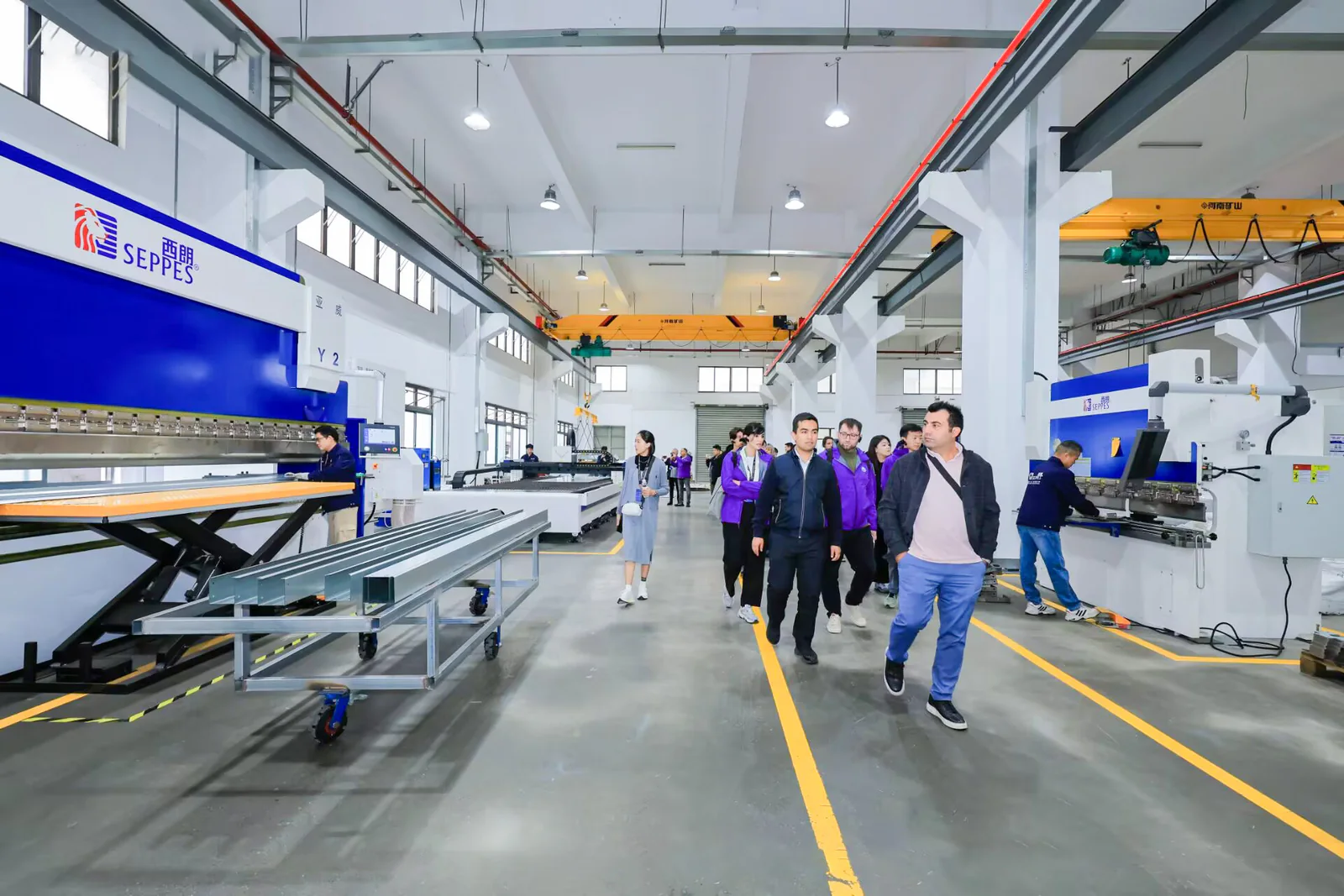
SEPPES is positioned as a source manufacturer and OEM/ODM solution provider for commercial automatic entrance doors. System discussions can connect entrance requirements with operator assembly, component coordination, production, quality management, packing and export preparation.
The objective is not to sell an isolated component without context. It is to clarify which parts belong to the supplied system, which conditions remain the buyer's or installer's responsibility, and which project information must be confirmed before the system is finalized.
Practical Answers
Confirm terminology, supply responsibility and project inputs before comparing automatic door systems or individual components.
An automatic door operator is the powered assembly that moves the door and coordinates with its controller and drive. A complete automatic door system may also include activation and safety sensors, access-control interfaces, door leaves, frames, tracks, hardware and project-specific building coordination. The exact supplied scope must be confirmed for each project.
The terms are often used in overlapping ways, but they should not be assumed to describe the same package. “Opener” is a common buyer term, while “door operator” more specifically describes the powered operating assembly. Ask what motor, controller, sensors, track hardware and accessories are included before comparing offers.
Our main focus is complete door supply. Operator systems, components and accessories are generally supplied to existing customers as replacement, spare or repair parts. Large-volume standalone requirements, such as hundreds or thousands of sets, can be discussed separately. Configuration, mounting conditions, interfaces and responsibilities are reviewed before agreement.
Start with the door family, opening width and height, available side space or entrance depth, door material and estimated weight, pedestrian traffic, activation method, safety expectations, access-control requirement, installation environment, supply scope, quantity and destination. Drawings and site photographs are helpful when available.
An activation sensor creates an opening request when the required approach or input is detected. A safety or presence sensor monitors relevant areas around the doorway so the control logic can respond to detected presence. The functions may be housed in one assembly, but they should still be planned separately.
Access-control integration can be reviewed when the access method, required door behavior, controller input, signal responsibility and safety logic are defined. Do not assume compatibility from the reader brand alone; the interface and control requirements must be confirmed for the selected system.
SEPPES can provide replaceable spare-parts support and discuss selected automatic door parts or accessories. Existing-system identification, model information, photographs, required function and compatibility details should be supplied before a replacement component is confirmed.
SEPPES can provide remote online after-sales support, including online installation guidance and remote troubleshooting for the confirmed supplied scope. This does not imply local on-site installation, local maintenance coverage or an on-site service commitment.
Project Inquiry
Send the entrance information already available and identify the decisions that are still open. Our team can use your project details to review the automatic door system scope, component coordination and information required for a quotation.