Employee Entry
Define which side requires authorization, who manages credentials and how people leave the controlled area. Include any existing card system in the initial review.
Who should be allowed through this entrance?

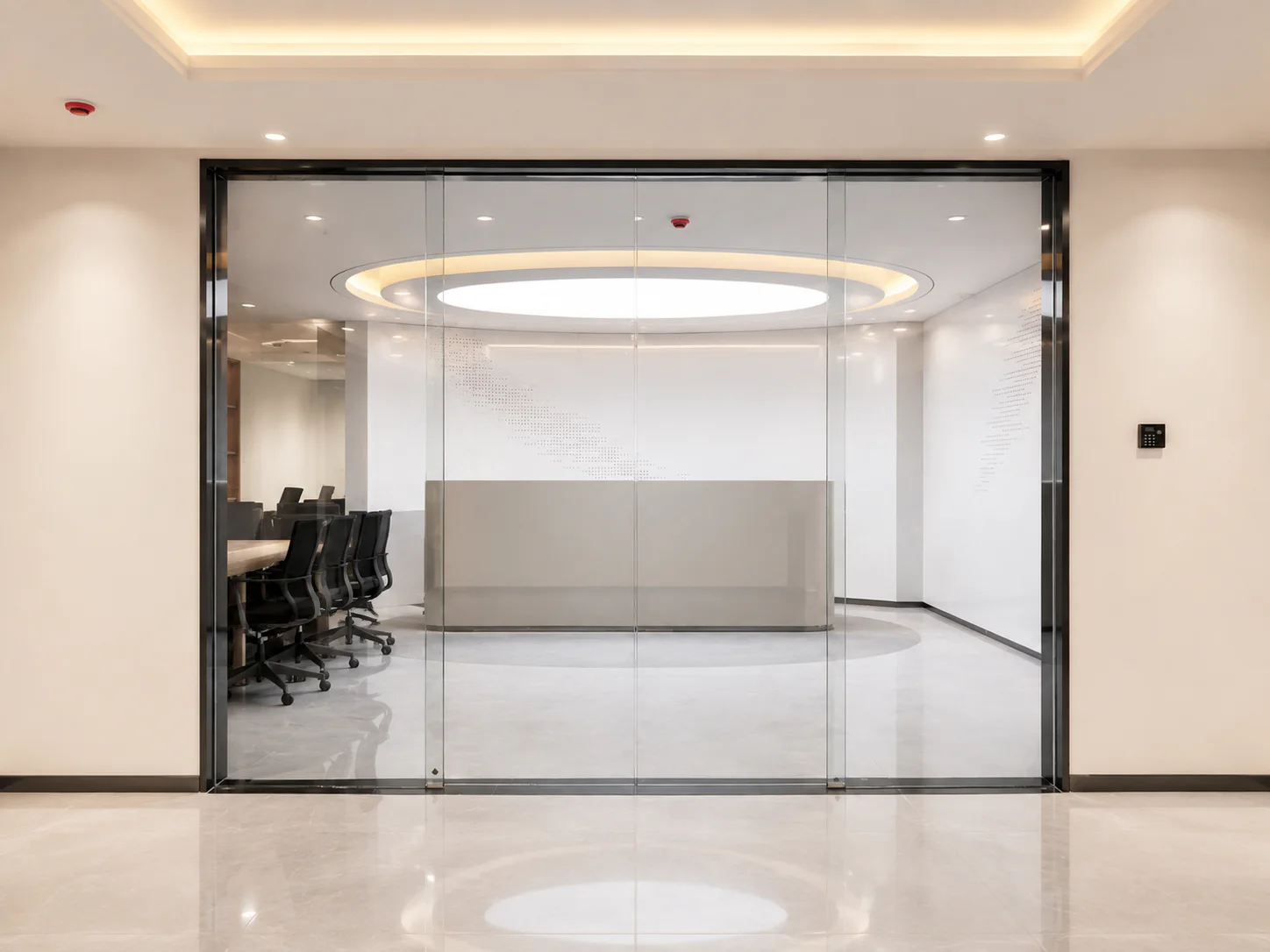
Sliding Door Systems
Plan who can enter, how people leave and when your entrance should be open. We work with your project team to coordinate the sliding door, access-control interfaces and required operating sequence.
Start with People and Permissions
An access-controlled automatic sliding door combines a powered entrance with an agreed access arrangement. Start with who may pass through, how permission is granted and what happens on each side of the door.
Define which side requires authorization, who manages credentials and how people leave the controlled area. Include any existing card system in the initial review.
Who should be allowed through this entrance?
Describe how reception or security staff admit an authorized visitor. The release point, visibility of the entrance and required door response need to be agreed together.
Who grants access to a visitor?
Identify when the entrance serves general pedestrian traffic and when access becomes restricted. Confirm who changes the mode and how entry, exit and locking should respond.
What should change outside normal opening hours?
If the entrance remains open to general pedestrian traffic throughout its operating period, begin with the Automatic Sliding Glass Door and define whether an access-control interface is needed.
Make the Interfaces Clear
Authorization, an opening request and safety detection serve different purposes. Review their relationship with the door controller so that the entrance behavior and each supplier’s responsibilities are clear.
Credential validation or an authorized staff release.
Review the opening request with the agreed mode, locking and detection inputs.
Operates the sliding leaves as part of the confirmed door configuration.
Agree release, closing and re-locking behavior.
Define the permitted way to leave from the other side.
Review monitored areas and the required door response.
A reader or reception button does not define the whole entrance sequence. Plan safety sensing alongside access control, including what the door should do while the passage is occupied.
Describe the Required Behavior
Use a short operating brief to connect daily access rules with the proposed equipment. These discussion points help your door and security teams confirm the same requirements.
| Operating Requirement | Intended Use | Agree Before Configuration |
|---|---|---|
| Authorized entry | A credential or approved release requests entry. | Which device grants permission, which side is controlled and how the lock and door respond. |
| Exit from the controlled area | People need an agreed way to leave. | The exit request method, sensor or button role and any direction-specific restrictions. |
| Reception or security release | Staff admit a visitor from a designated position. | Who operates the release, what they can observe and the required opening duration. |
| Public operating period | The entrance serves normal customer or visitor movement. | Activation on each side, lock state and responsibility for changing the operating mode. |
| Restricted or closed period | The building applies different access rules. | Permitted entry and exit, locking sequence and how the agreed mode is checked. |
Scroll across to read all planning points.
Bring the Equipment Details Together
For automatic sliding door access control, the identity of a reader alone is not enough to confirm integration. Include the access controller, door controller and locking information that your team already has.
These are inputs for project review, not a universal compatibility list. Final signals, equipment and settings are confirmed for the selected entrance.
| Review Item | What to Share | What to Confirm |
|---|---|---|
| New door or existing entrance | Opening dimensions, site photos, door arrangement and whether equipment will be retained. | Installation conditions, door suitability and the boundary of the proposed work. |
| Access equipment | Brand, model and available documentation for the reader and access controller. | Which device provides authorization and which output reaches the door system. |
| Door controller and signals | Controller identification and interface information, when available. | Signal type, electrical requirements, timing and compatibility for the selected configuration. |
| Locking arrangement | Existing lock details or the required locking behavior. | Lock suitability, release and re-lock sequence, power requirements and supplied items. |
| Entry, exit and detection | A short description of normal use, visitor handling and restricted periods. | Activation and presence detection alongside access permissions; required responses in each mode. |
| Site coordination | Who supplies the access equipment, power, cabling and installation work. | Connection responsibilities, commissioning checks and handover information. |
Scroll across to read the information and confirmation points.
If a model or drawing is unavailable, describe the current arrangement and the behavior you need. We can help identify the next information to collect.
From Documented Projects
These projects show two different access requirements. Their recorded configurations are useful discussion references; the equipment and sequence for a new project still need review.
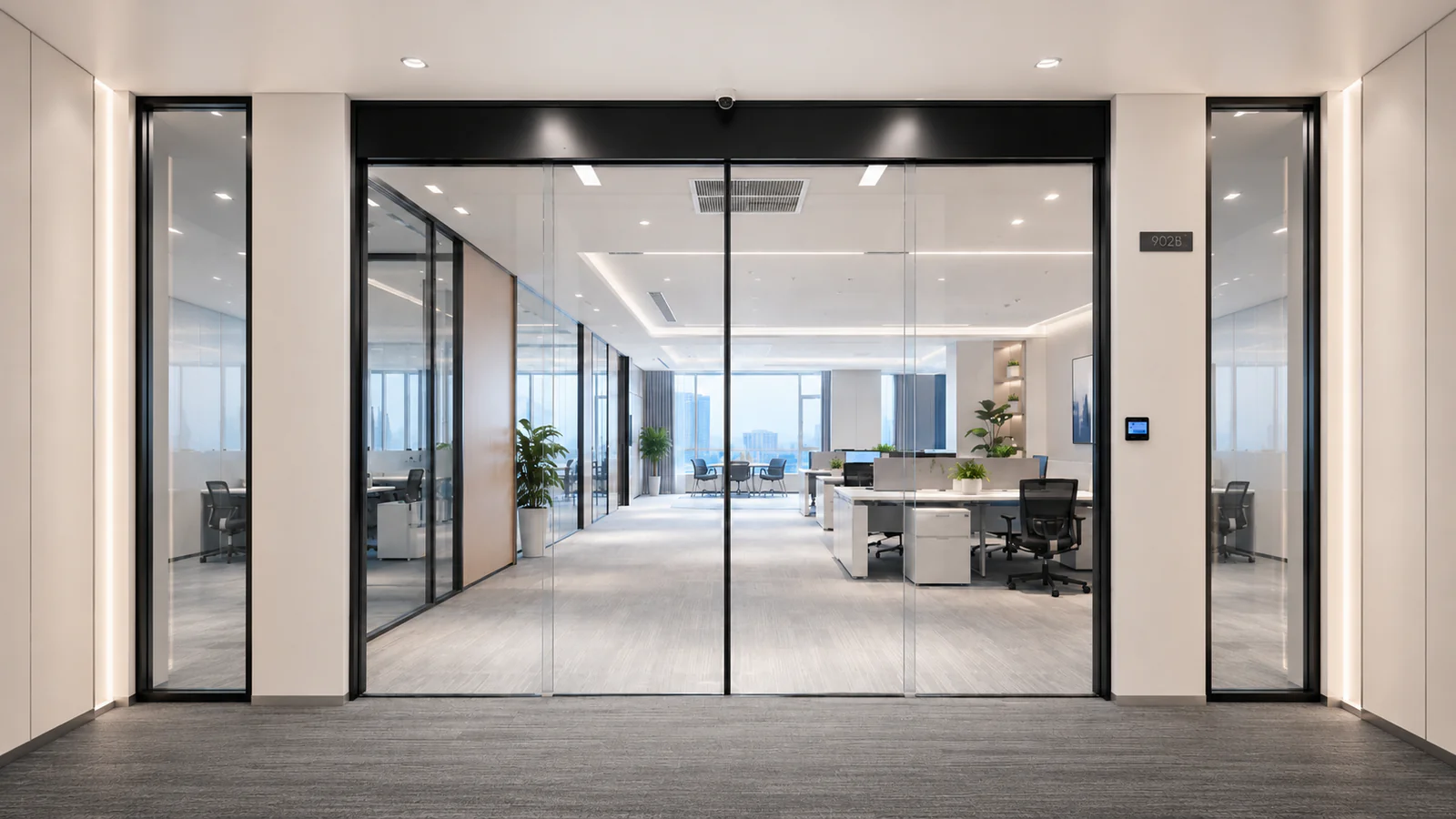
Office Interior / Employee and Visitor Access
The office project connected employee entry to the existing access-control system and provided a reception release for visitors. An exit activation sensor, safety presence sensor and electric locking interface formed part of the recorded supply.
View the Office Interior Project
Bank Lobby / Public and Restricted Periods
The bank lobby project combined normal automatic access during business hours with controlled entry and locking arrangements for restricted periods. Its supplied system included security-desk release control and an electric locking system.
View the Bank Lobby ProjectWorking with Your Project Team
Our main focus is complete door supply. Operator systems, components and accessories are generally supplied to existing customers as replacement, spare or repair parts. Large-volume standalone requirements, such as hundreds or thousands of sets, can be discussed separately.
Agree the door construction, operator, detection and control interfaces in the proposal. Identify any readers, access controllers or locking devices to be reviewed as part of the requested package.
Confirm who supplies credential management, access software, power, cabling and installation. Agree who checks the connected sequence and records the handover settings with the project team.
We provide online installation guidance and remote troubleshooting. For support on an earlier order, send its reference, equipment identification and a description of the issue.
Quantities, compatibility, supplied items and commercial terms are reviewed before agreement. The scale of a standalone request is a discussion input, not a fixed minimum order or an availability promise.
Frequently Asked Questions
Start with the equipment and operating requirements you already know. We can help identify what still needs review.
Yes, card-reader coordination is documented in our office interior project. For a new entrance, share the reader and access-controller details so the interface, locking sequence and door response can be reviewed. This does not establish compatibility with every card system.
It can be considered after reviewing the existing equipment. Send its brand, model and available interface documentation, together with the door controller details if the door is also being retained. We can then clarify what needs confirmation with your access-control supplier.
That arrangement is documented in the office interior case. For your entrance, define the rules on both sides and review the activation, safety detection, locking and operating modes together before agreeing the configuration.
An existing-door request needs a review of the door, operator, controller, locking arrangement and installation conditions. Describe the equipment you intend to retain. For an earlier SEPPES order, include its reference so we can review the original supply and available support.
The included equipment is agreed in the project proposal. Identify the readers, locks, access controller and software supplied by your security team or other contractors, and the items you want SEPPES to review. An access-control interface alone does not define the complete access-management package.
Continue Your Project Review
Talk Through Your Entrance
Tell us who needs to use the entrance and how you want it to operate. We can review the door configuration with your team and clarify the access-control information needed for a proposal.
Include the opening dimensions, new-build or retrofit status, entry and exit rules, existing equipment, locking needs, quantity and destination. Equipment labels, drawings and site photos can be shared when we follow up.