Drive & Transmission
The motor and transmission create the movement. Review them with the moving door weight, travel and opening arrangement.

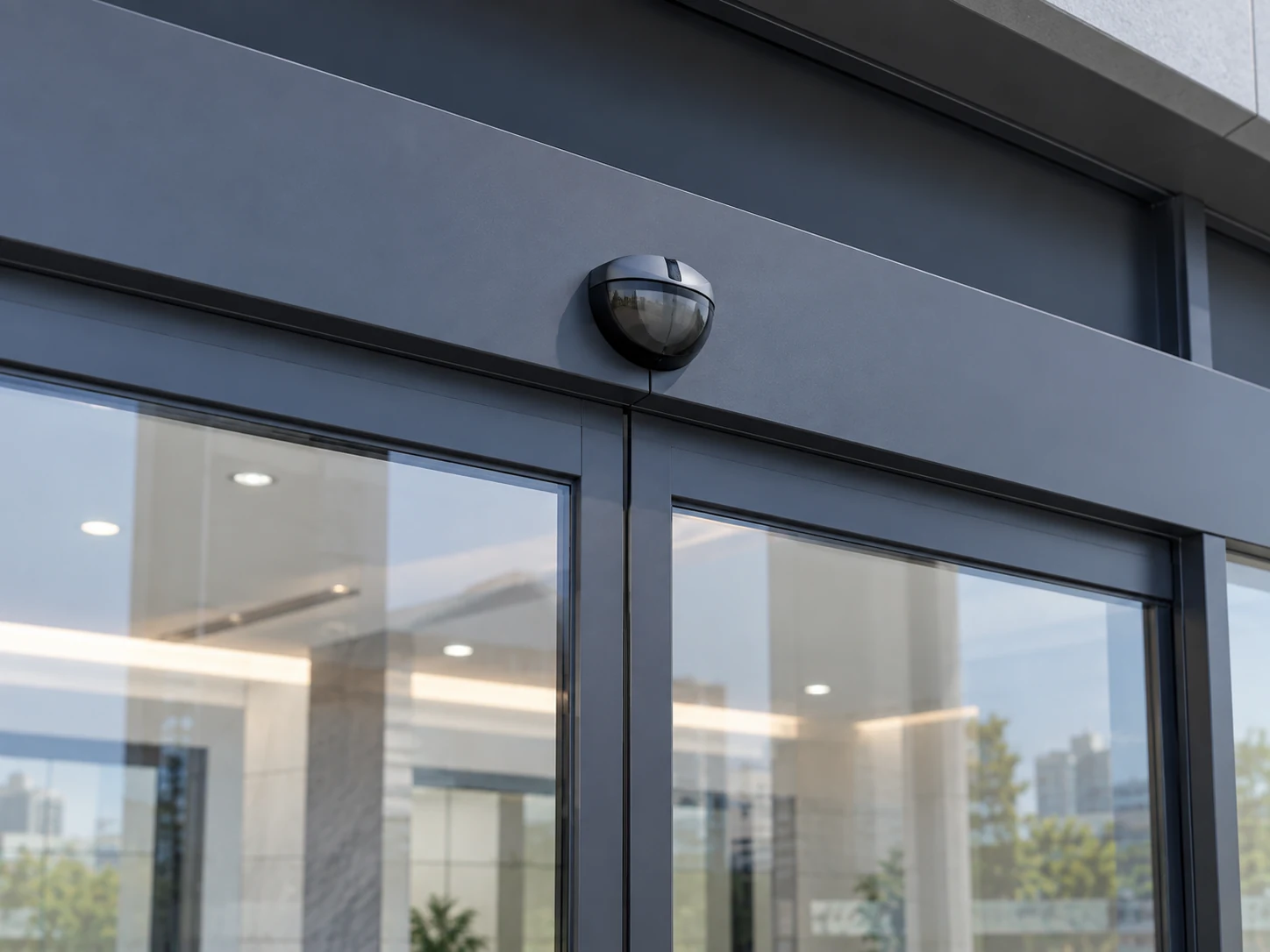
Sliding Door Systems
Select the opener around the door it will move. Review door-leaf weight, mounting space and operating requirements with SEPPES for a complete sliding-door project or replacement support for an earlier order.
Inside the Door Header
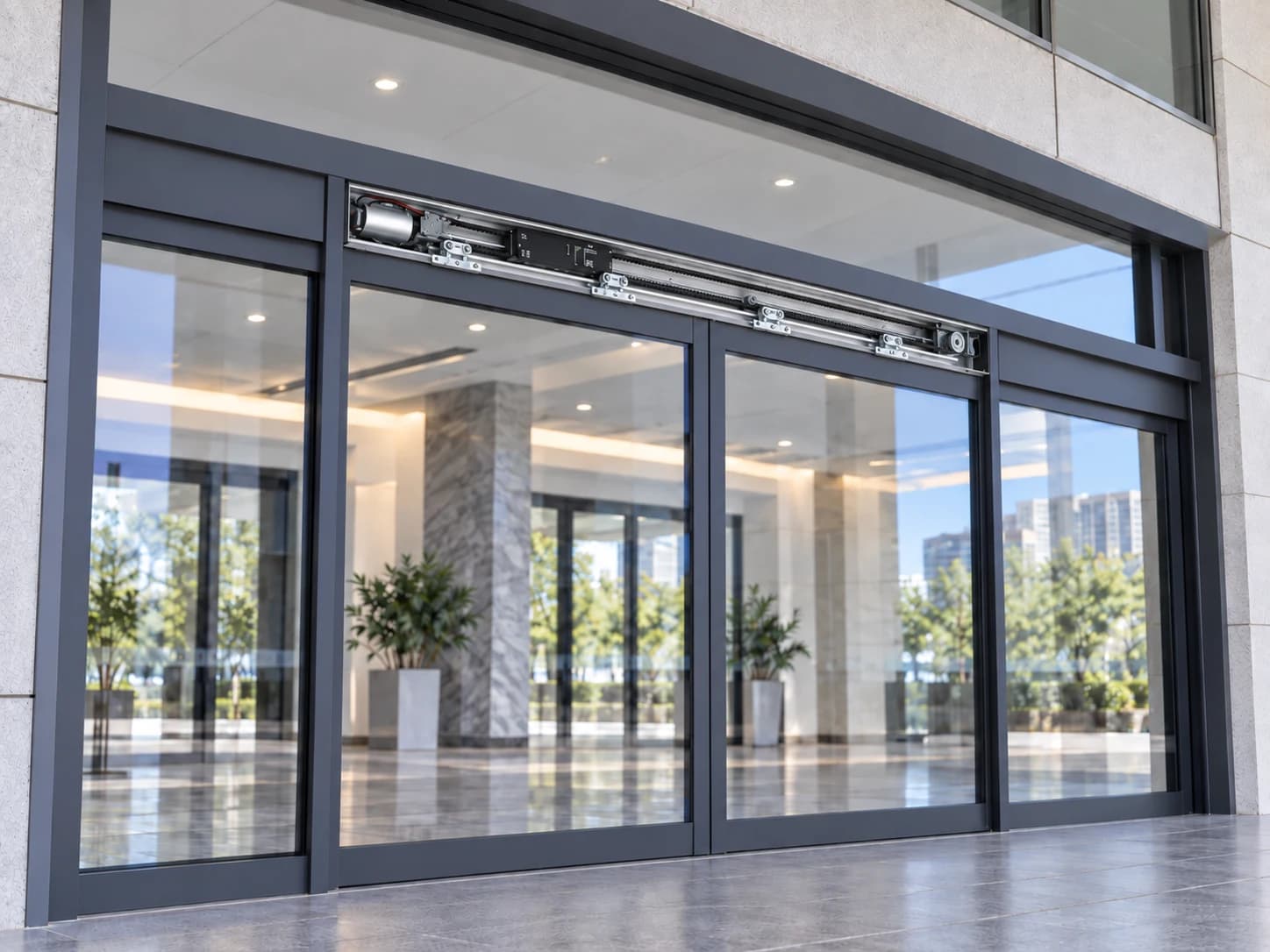
An automatic sliding door opener moves and controls the sliding leaves through a coordinated drive and mechanical assembly. Check the equipment included in the proposal, from the motor and controller to the track hardware and external devices.
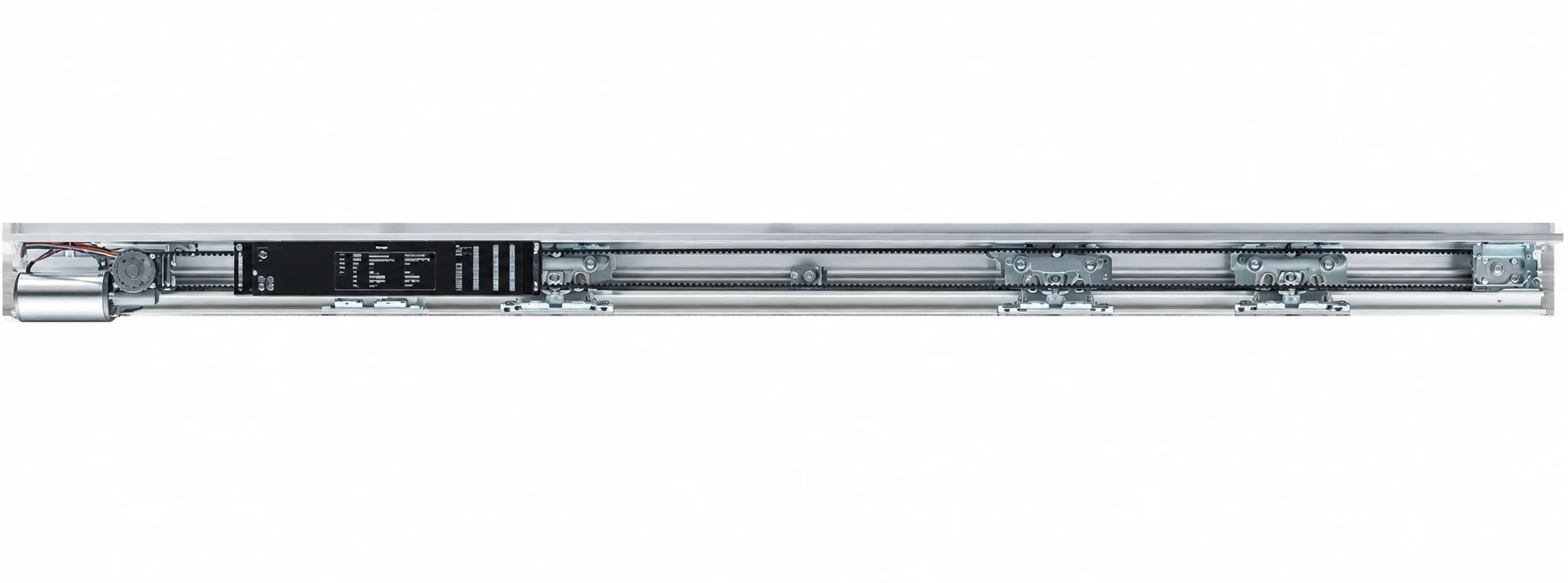
The motor and transmission create the movement. Review them with the moving door weight, travel and opening arrangement.
The controller coordinates opening requests and the configured closing response. Confirm the electrical supply and connected devices.
The track and hanger arrangement supports guided travel. Door connections, mounting support and service access belong in the same review.
Door leaves, frames, activation and presence sensors, locks and access devices require separate scope confirmation. An opener description alone does not define a complete entrance.
Review the Complete Sliding Door SystemSelection Starts with the Door
Use the conditions below to prepare an opener selection discussion. If you are comparing an automatic sliding glass door opener for a new entrance, begin with the moving leaves and available installation space.
These are inputs for configuration review. Final capacities, dimensions, settings and interfaces are confirmed for the selected arrangement.
| Selection Input | What to Provide | What to Confirm |
|---|---|---|
| Door construction & weight | Dimensions and weight of each moving leaf; glass, frame and attachment details. | The drive, hangers and connections for that moving load. State per-leaf weight separately from total weight. |
| Opening arrangement & travel | Single-sliding or bi-parting layout, clear opening and available side space; identify telescopic requirements separately. | Panel travel, rail arrangement and the mechanical configuration required for the entrance. |
| Header & mounting space | Mounting surface, space above the opening, adjacent ceiling and photographs of the fixing area. | How the assembly is supported and whether the cover and components remain accessible for service. |
| Use & movement settings | Building use, busy periods and desired opening, closing and hold-open behavior. | The configuration and settings appropriate to the moving door, pedestrian use and sensing arrangement. |
| Power & installation environment | Available site power, cable routes and whether the header is exposed to weather or moisture. | Electrical preparation and the suitability of the selected equipment for those conditions. |
| Sensing & access requirements | Opening triggers, monitored areas, access equipment and the response required during restricted use. | Device functions, controller interfaces and who supplies and connects each item. |
Scroll across the table to read each selection input and its confirmation points.
No confirmed leaf weight yet? Send the dimensions and glass or frame details you have so we can identify the information still needed.
Installation & Replacement
Before changing the opener, review the entrance around it. The existing door leaves, track, mounting support and control equipment affect what can be retained and what needs further attention.
Existing customers can send their order or project reference, available equipment labels and photographs of the door and relevant parts.
Explain the observed problem and any changes to the door leaves, hardware or connected controls. Include when the issue occurs.
Confirm mechanical fit, electrical interfaces, matching accessories and installation responsibilities before selecting a replacement.
A similar-looking opener or connector does not establish a replacement match. For an entrance conversion, the review may lead to a broader door and system scope.
Define the Required Response
Specify what the entrance should do when someone approaches, remains in the passage or requests restricted access. These requirements guide device selection and control coordination.
Describe how users should request entry: approach detection, a push button or an access-control device. Identify which equipment supplies that request.
Identify the areas that need monitoring during passage and closing. Review device positions and the controller response with the door layout.
Explain normal and restricted access, locking requirements and special operating needs. Confirm the interface and response for the selected configuration.
Emergency Opening and Manual Release can be reviewed for the applicable configuration. Their activation logic, required accessories and power-loss response are confirmed with the project.
Understand Activation and Presence DetectionFor controller interfaces, connected equipment and maintenance coordination, review the Automatic Door Operator guide.
For sensing positions, approach routes and replacement information, review Sliding Door Sensor Requirements.
Working with SEPPES
Our main focus is complete door supply. Operator systems, components and accessories are generally supplied to existing customers as replacement, spare or repair parts. Large-volume standalone requirements, such as hundreds or thousands of sets, can be discussed separately.
Start with the entrance and door construction. We review the opener as part of the coordinated complete-door supply.
Connect replacement, spare-part and repair requests to the original SEPPES order so the earlier configuration can be reviewed.
Provide quantity, intended door construction, mounting conditions and requested items for a separate supply discussion.
Before you order, we’ll help you confirm the quantities, check that the equipment suits your door and clarify what’s included. We also provide remote installation guidance and troubleshooting to support your team on site.
Explore SEPPES Project SupportFrequently Asked Questions
Practical starting points for a sliding-door project, an existing entrance or replacement support.
Yes. Start with the dimensions of each moving leaf, glass specification and frame construction. We can identify the missing information with you. The final moving weight and hardware arrangement still need confirmation before configuration is agreed.
An existing entrance needs a review of its door condition, mounting support, track, hangers, connections and control equipment. Share the available information before assuming the opener can be fitted. For an earlier SEPPES order, include the order reference so replacement requirements can be checked against the supplied configuration.
The name alone does not establish what is included. Confirm the drive, controller, mechanical hardware, sensing equipment and accessories in the itemized scope. Door leaves, frames and surrounding site work need their own scope confirmation.
Opening, closing and hold-open requirements are reviewed together with door weight, travel, use and sensing. An automatic sliding door opener and closer should be specified around that combined behavior; available settings are confirmed for the chosen configuration.
Integration can be reviewed once the access equipment, signal requirements, intended door response and responsibilities are known. Share device information and any available connection records. A reader brand or connector appearance alone does not confirm compatibility.
Continue Your Review
Talk Through Your Requirements
Tell us whether you are planning a complete entrance, requesting support for an earlier SEPPES order or discussing a large standalone requirement. We can review the information available and identify the next configuration decisions.
In your message, include the opening and leaf dimensions, known door weight or construction, quantity, destination and operating needs. For replacement support, add the original order reference and describe the issue. Photographs can be shared when we follow up.