Drive & Transmission
The motor supplies movement through the selected transmission. Review it with the moving structure, travel and mechanical connections.

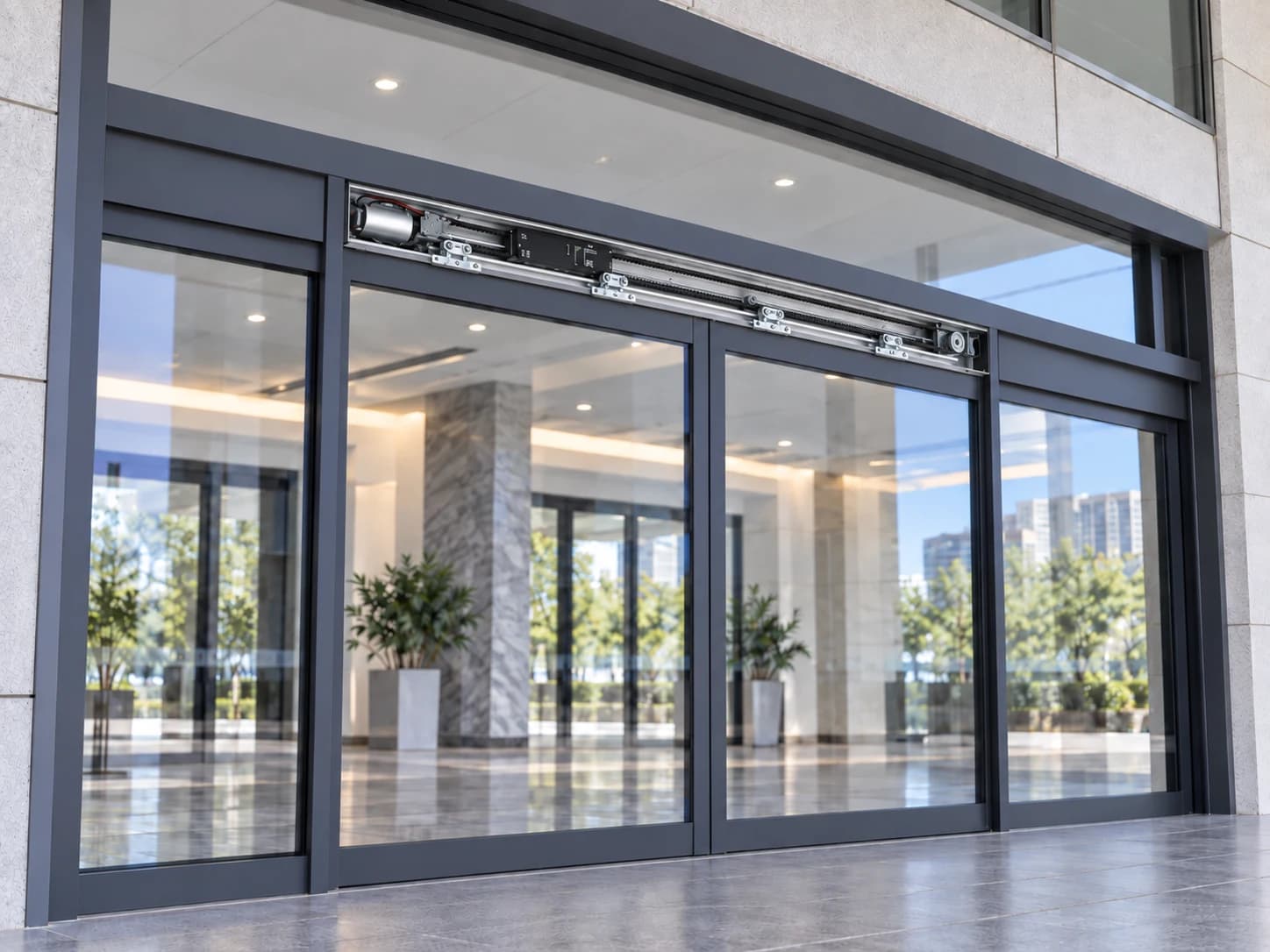
Door Systems
Match the drive and controls to the door they serve. We help you review operator requirements, connected equipment and service access for a complete entrance or support for an earlier SEPPES order.
Drive, Control & Connections
An automatic door operator brings drive and control equipment together to move the door. Choosing automatic door operators starts with the door movement and required behavior, followed by confirmation of the equipment included.
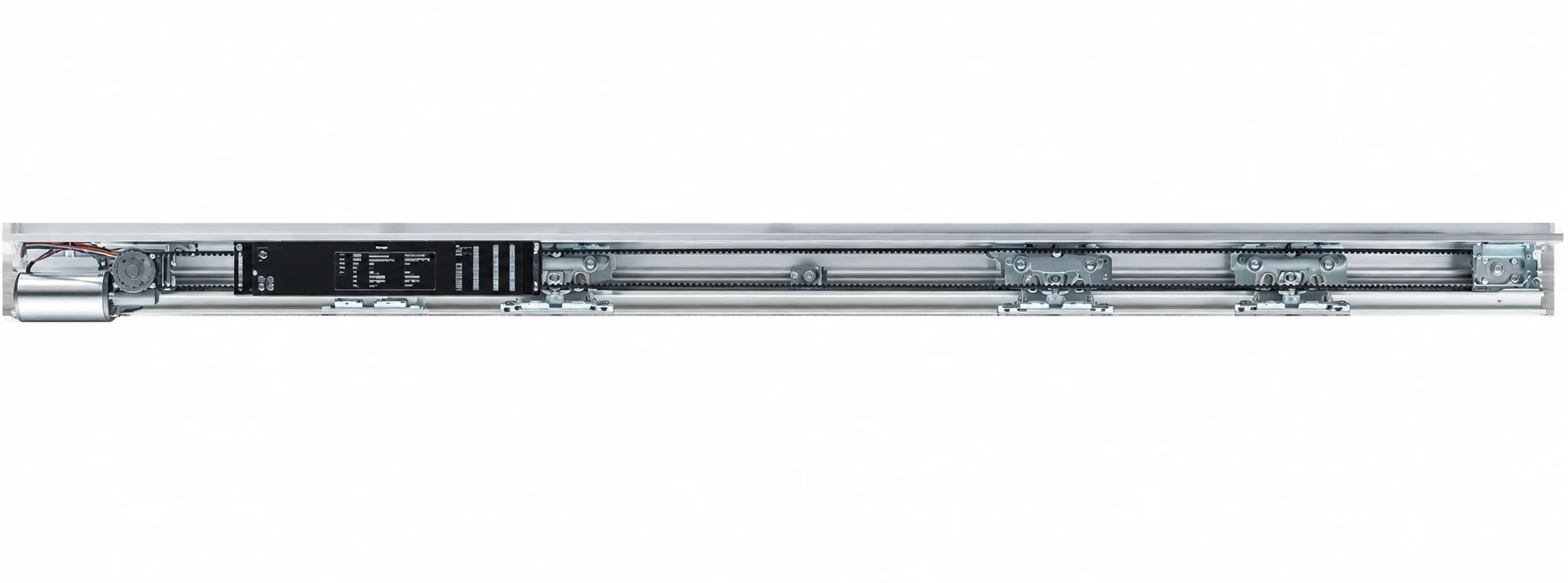
The motor supplies movement through the selected transmission. Review it with the moving structure, travel and mechanical connections.
The controller coordinates the configured movement and connected inputs. Confirm the power arrangement, device information and intended response together.
For a sliding entrance, the track, hangers and door attachments form part of the review. Their inclusion depends on the agreed package.
Door leaves, frames, sensors, locks and access devices need their own scope confirmation. Sliding and revolving entrances require separate configuration reviews; this sliding assembly is not a universal operator for both door families.
Review the Complete Entrance SystemConfiguration Review
A capacity figure alone does not describe the entrance. Bring the moving load, expected use, connected devices and maintenance access into the same review.
These are selection inputs. Final load ratings, electrical details, settings and compatibility are confirmed for the selected configuration.
| Requirement | What to Provide | What We Review Together |
|---|---|---|
| Door type & moving structure | Door movement, number of moving leaves, construction and known weight per leaf. | Drive arrangement, load capacity, travel and attachment details for that configuration. |
| Operating demand | Building use, busy periods, repeated opening and any prolonged hold-open requirements. | Suitability for the expected use and the movement settings to confirm at commissioning. |
| Power & environment | Available electrical supply, installation location and exposure to moisture or weather. | Electrical version and equipment suitability; identify any additional protection needed. |
| Connected equipment | Sensor, access-control and lock details, available connection records and the required door response. | Signal requirements, device roles and controller compatibility before agreeing connections. |
| Service access | Header and ceiling photographs, cover access and the space around the equipment. | Access for inspection and component replacement, with site responsibilities agreed. |
Scroll across the table to read the information and review points.
For opening dimensions, header space and existing sliding-door conditions, use the Automatic Sliding Door Opener selection guide.
Connected Equipment
Describe what should happen at the entrance, then review the devices and interfaces needed to support it. Keep the door supplier, installer and access-control team working from the same requirements.
What should request an opening?
Identify approach sensing, a push button or an access-control device. Share the equipment details and describe which users should be able to request entry.
Agree togetherConfirm the input signal, connection method and device supplier.
What should happen while the passage is occupied?
Identify the doorway areas to monitor and the required response during movement. Activation and presence detection have different roles, even when combined in one device.
Agree togetherConfirm sensing coverage, controller response and commissioning checks.
How should the door behave during restricted access?
Describe permitted entry, locked periods and the relationship between the access system, lock and operator. A reader brand alone does not establish a compatible connection.
Agree togetherConfirm the operating sequence and who supplies and connects each item.
Which responses need separate agreement?
Include any requested operating modes, Emergency Opening or Manual Release. Available functions, accessories and power-loss behavior are reviewed for the applicable configuration.
Agree togetherRecord the required response and confirm how it will be checked on site.
Record who supplies each device, who connects it and who checks the final response. Available drawings and interface records support that review; connector appearance alone cannot confirm compatibility.
Review Activation and Presence DetectionFor sliding-door mounting, approach routes and device information, review the Sliding Door Sensor Configuration guide.
Service & Replacement
A useful service discussion begins with the original configuration and what has changed. Clear records help us review the requirement with your team before a replacement is selected.
Plan access to the cover, controller and mechanical connections during the entrance design. Remote support needs a local team able to inspect the equipment and carry out the agreed work.
For an earlier SEPPES order, send the order or project reference, readable equipment labels and photographs of the entrance and affected component.
Tell us when the issue occurs, what the door does and whether any hardware or connected equipment has changed. Share an existing fault indication if one is available.
We review the available records with your team and provide remote troubleshooting or installation guidance. Any replacement needs its mechanical fit, electrical connections and matching equipment confirmed first.
Working with SEPPES
Our main focus is complete door supply. Operator systems, components and accessories are generally supplied to existing customers as replacement, spare or repair parts. Large-volume standalone requirements, such as hundreds or thousands of sets, can be discussed separately.
Review the operator alongside the door construction, sensing and controls. The proposal should identify the supplied items and the site work your team will arrange.
Use the original order details to review replacement, spare-part or repair needs against the equipment already supplied.
Share the intended door arrangement, required items, quantity and destination for a separate discussion. Quantity alone does not confirm availability or compatibility.
Before an order is agreed, we’ll help you review the quantities, equipment details and included items. Remote installation guidance and troubleshooting support your team as the project moves forward.
Frequently Asked Questions
Clarify the equipment, connections and information needed before agreeing a configuration.
The motor is one part of the powered arrangement. An operator description may also cover the controller, transmission and mechanical hardware. Ask for the itemized scope so both teams are discussing the same equipment.
The terms can overlap in supplier descriptions. The useful distinction is the equipment included and the door it will serve. This page covers drive, control and service coordination; our sliding-door opener guide develops the installation and existing-door selection inputs.
Do not assume interchangeability. The movement, structure and control arrangement need to be reviewed for each door family. The assembly shown here is a sliding-door reference; a revolving-door project requires its own configuration review.
Only the agreed itemized scope establishes inclusion. Identify activation sensors, presence detection, mode controls, locks and access devices separately, including equipment provided by other project teams.
We can review it with the equipment identification, available technical records and the required operating response. Matching appearance or connectors is not enough to confirm a replacement. For an existing SEPPES entrance, include the original order reference.
Send the information you have: an order reference, readable labels, entrance photographs and a description of the requirement. We can help identify the missing details. Final equipment selection or replacement confirmation follows the configuration review.
Continue Your Review
Talk Through the Configuration
Tell us about the door, the equipment it needs to work with and the support you need. We can review the available details with you and identify the next configuration decisions.
Include the door type, known leaf weight, operating needs, connected equipment, quantity and destination. For an earlier SEPPES order, add the order reference and describe the issue. Labels, photographs and records can be shared when we follow up.