
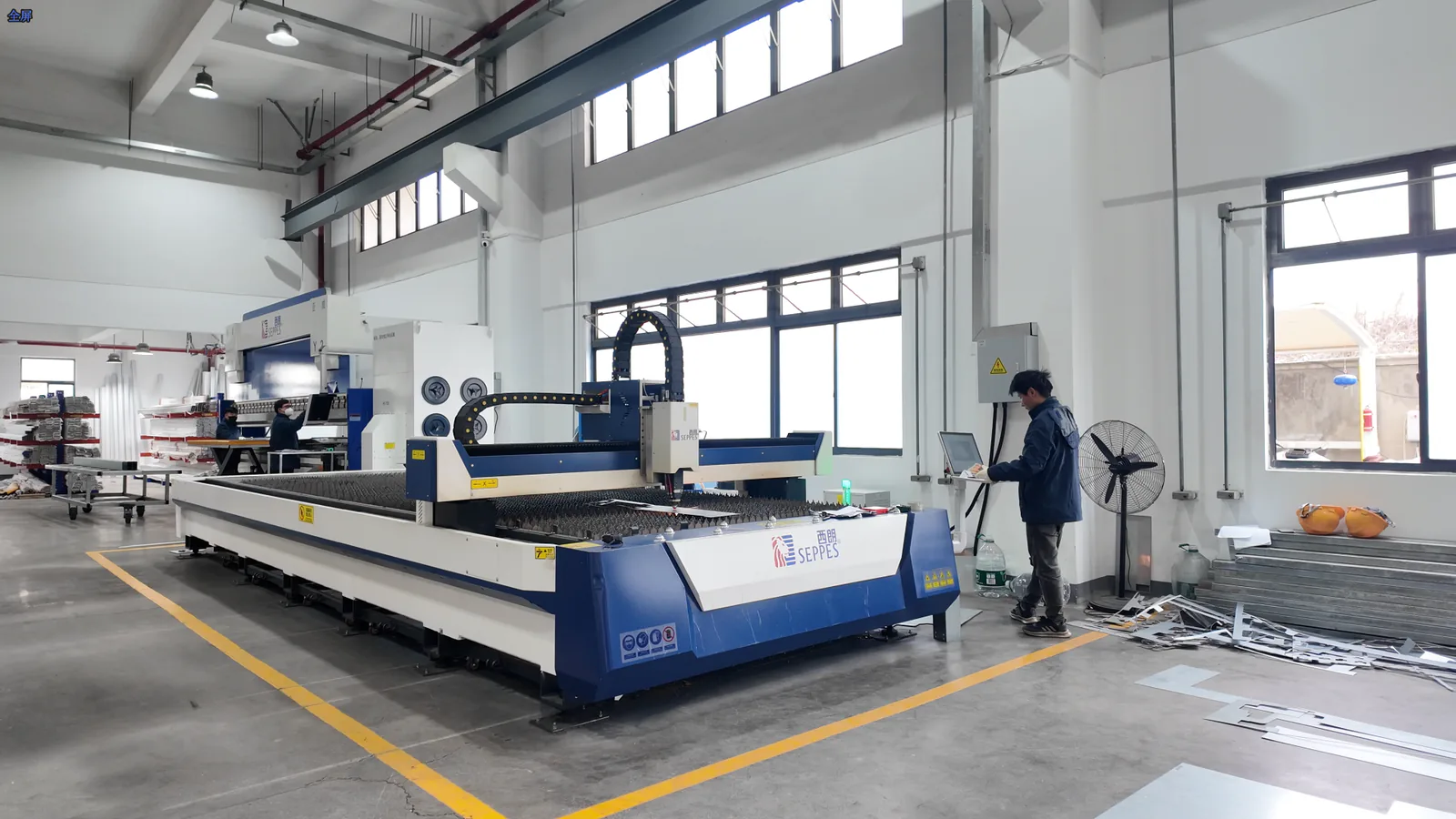
To evaluate an automatic door manufacturer, connect its stated capabilities to the product you intend to buy. Review relevant experience, production responsibility, engineering coordination, inspection evidence, delivery preparation and support. Ask for explanations and records that apply to your proposed scope, and keep unresolved questions visible before committing to an order.
For distributors, importers and commercial project teams, the challenge is often comparing answers that describe different things. One company may show a completed entrance, another may describe an operator package, and a third may present general factory equipment. Put those answers against the same project brief so you can judge what each one establishes.
Define What You Need the Manufacturer to Supply
Before comparing companies, describe the cooperation you need. A complete entrance, an operator package and selected replacement parts require different evidence. For a complete door, review the relationship between the leaves, structure, automation and site interfaces. For an operator package, concentrate on the equipment and its documented relationship with locally supplied doors.
An importer developing a repeat product range also needs a different conversation from a contractor buying for one building. The importer may need consistent configurations, identifiable replacement parts and a controlled process for future changes. The contractor needs the manufacturer to work from the current project drawings and identify the details that remain unresolved.
Write a short brief covering the door family, application, approximate quantity, destination and requested supply boundary. State whether the entrance is new or a retrofit, and identify who will fabricate, install and commission the equipment locally. You can then ask each candidate to respond to the same brief instead of comparing unrelated presentations.
At this stage, the useful question is whether the company understands your requested scope and can explain its part in delivering it. You do not need a complete final specification to start, but provisional dimensions or operating requirements should remain clearly marked as provisional.
Review complete-door and operator-package supply directions to establish which capabilities your evaluation needs to cover.
Check Experience with the Door Type You Need
Ask for examples related to the entrance you are planning. When evaluating an automatic sliding door manufacturer, a relevant example should help you understand the door arrangement, the supplied operator and controls, and the division between factory supply and site work. A finished entrance photograph provides context, but it does not show all of those responsibilities.
For a revolving entrance, ask how the proposed layout, enclosure, drive and detection arrangement will be reviewed together. Experience with a sliding operator alone does not answer those questions. An automatic revolving door manufacturer should be able to discuss the particular configuration under consideration and identify the information needed before confirming it.
Compare the case with your brief: what was the entrance used for, which door type was supplied, and what did the manufacturer actually provide? Ask which aspects are comparable and which are different. Do not treat an attractive hotel entrance as proof of suitability for every public building or a different operating pattern.
Some project details may be confidential. A useful anonymized record can still describe the entrance requirement and supplied scope without naming the customer. If photographs or technical documents cannot be shared, ask what other evidence can support the discussion. Record any remaining uncertainty rather than filling it with assumptions.
Browse automatic door project cases and compare their documented requirements and supplied systems with your own project.
Start with the relevant product family: Automatic Sliding Doors or Automatic Revolving Door. Use the available configuration information to frame the questions for your project.
Verify the Factory’s Role in Production
A factory visit or live video discussion is most useful when it follows the product being considered. Ask which fabrication, assembly and inspection activities take place at the facility, which components come from other companies, and who takes responsibility for the final supplied configuration. A list of machines does not answer those questions by itself.
When reviewing an automatic sliding door factory, connect the production explanation to your package. For example, if the quotation is for an operator system, ask where it is assembled and checked. If door leaves or frames are included, ask how their drawings and dimensions are confirmed. Avoid assuming that every item in a brochure comes from the same production process.
A manufacturer does not have to produce every component internally. The important issue is how it selects, identifies and coordinates purchased components and handles changes. Ask whether an alternative motor, controller or sensor would require your approval and an updated equipment list before shipment.
Keep a record of the company identity, facility discussed and responsible contacts, alongside the product information. Where possible, review an agreed example from drawing through assembly to inspection. Respect confidentiality and factory access restrictions; if access is limited, agree on another way to review the relevant process rather than treating a marketing video as a complete audit.
Review Engineering Support and Customization Limits
Use a real project question to evaluate technical communication. Share an opening drawing or a clearly described interface requirement and ask what the engineering team would need to confirm. A useful response explains the assumptions, requests missing information and identifies any limitation. An immediate yes without a defined configuration leaves the decision unfinished.
Ask who reviews drawings, how revisions are identified and who approves a change before production. The sales quotation, drawing and equipment list should refer to an agreed configuration. If the opening changes after approval, clarify which documents need revision and whether the change affects the operator, door construction, packaging or project schedule.
For OEM/ODM cooperation, separate product configuration from branding. Discuss the requested changes to appearance, equipment, labels, packaging and manuals individually. Confirm what the manufacturer can review, what needs further development, and which information each party must provide. Do not assume that private labeling includes unrestricted redesign or compatibility with every external device.
For example, an access-control request should lead to a discussion of the device, required operating behavior and connection information. The manufacturer and the local integrator need an agreed interface, not just a general statement that access control is supported. Ask how unresolved technical questions will be recorded and closed before the configuration is released for production.
Ask How Quality Checks Are Recorded
Ask the company to explain the checks relevant to the product you would receive and what records are available for review. Depending on the supplied scope, the discussion may include incoming components, assembly checks, functional checks and final identification or packing checks. These are questions to investigate, not an assumption that every candidate follows an identical inspection plan.
A useful record identifies what was checked and the basis used to judge the result. Ask whether it refers to a particular component, model, sample, batch or completed order. If the company cites a cycle test, ask which system was tested, under what conditions and what the result demonstrates. A component test does not automatically establish the performance of every finished entrance.
Also ask what happens when a check finds a problem. Who records the issue, authorizes the correction and confirms the follow-up check? For repeat orders, discuss how the company identifies the affected equipment and communicates changes. Evidence of how an exception is handled can be more useful than a general promise of consistent quality.
Agree on the inspection information needed for your order before production starts. A sample record can help establish the format, but it is not the final record for your equipment. Factory checks also do not replace the installation, adjustment and site acceptance work required for the actual entrance; identify the responsible project parties separately.
Confirm Production Planning and Delivery Preparation
Ask what must be approved before the manufacturer can confirm a production plan. These inputs may include drawings, the configuration list, finishes, quantity and packaging requirements. Keep a tentative schedule separate from a confirmed commitment, and ask how a later technical change would be assessed and communicated.
For an order with several entrances, discuss how the company will identify the packages and relate them to the opening schedule. Ask how it distinguishes components intended for different doors and what information the receiving or installation team will receive. Clear identification matters when similar-looking equipment belongs to different configurations.
Review the proposed packing method in relation to the supplied items and handling route. Ask what is assembled, what travels separately and which items require protection or separate identification. Request a relevant packing example where available, while confirming that the final approach will match your order rather than assuming a photograph defines the agreed packing specification.
The manufacturing review should establish whether the team can explain these preparation steps and their dependencies. Detailed freight responsibilities, payment terms and quotation comparisons belong in the separate supplier review. Keep the two conversations connected, but do not use a delivery estimate as a substitute for checking technical readiness.
Clarify Spare Parts and Technical Support
Discuss support before placing the order, while you can still clarify equipment identification and documentation. Ask how a future parts request should identify the installed system and what information the support team needs. A model name alone may not explain a later configuration change, so discuss labels, component references and the records to keep with the entrance.
Ask how the company reviews replacement compatibility and communicates a changed or superseded part. Do not assume that visually similar components are interchangeable. For a distributor holding stock, ask which parts merit further review for the intended product range rather than accepting a universal spare-parts list without reference to the equipment.
Confirm the support channels, available documentation and the division of responsibility between remote advice and site work. Who can investigate the equipment locally, carry out an agreed intervention and verify operation afterward? A remote support contact does not establish local installation or maintenance coverage. Any promised response time, warranty term or long-term parts commitment needs separate written agreement.
SEPPES generally provides replacement, spare and repair parts to existing customers, with remote online installation guidance and troubleshooting. Large-volume standalone component requirements can be discussed separately. The required parts and support scope should be reviewed against the supplied configuration. Local installation, maintenance and site checks need an identified responsible party; they should not be inferred from the availability of remote assistance.
Compare Manufacturers Using an Evidence Checklist
Use the same questions for each shortlisted company, then record the answer, supporting document and open point. The checklist below suggests evidence to request where relevant. It does not imply that every manufacturer has supplied these records or that every item is mandatory for every purchase.
| Review area | Question to ask | Evidence to request | Clarify before proceeding |
|---|---|---|---|
| Product experience | Which comparable door configurations have you supplied? | Relevant project description and itemized supplied scope. | Differences between the example and the proposed entrance. |
| Production responsibility | Which activities are in-house, and who coordinates purchased components? | Product-specific production explanation, facility review or agreed process example. | Outsourced stages, final responsibility and substitution approval. |
| Engineering coordination | Who reviews the drawings and approves revisions? | An example drawing revision and technical confirmation process. | Open interfaces, configuration limits and change ownership. |
| Quality records | What is checked, and how are exceptions resolved? | Relevant sample check records with product identity, conditions and results. | Record applicability, recheck process and order-specific documentation. |
| OEM/ODM scope | Which requested changes can you review and supply? | A written scope separating configuration, branding, packing and manuals. | Development needs, buyer inputs and approval milestones. |
| Delivery preparation | What needs approval before production and packing? | A proposed confirmation sequence, identification method and packing example. | Schedule dependencies, package contents and change notification. |
| Parts and support | How will we identify equipment and request technical help? | Part-identification approach, documentation and agreed support contacts. | Replacement review, support boundaries and local site responsibilities. |
On smaller screens, scroll within the table to read all four columns.
Separate a clear answer from an unresolved claim
When comparing automatic revolving door manufacturers, for example, do not simply tick a box for “project experience.” Note which configuration the example covers and whether the company has explained its own contribution. Apply the same discipline to sliding-door candidates: a relevant record should help answer the question you asked.
Mark each point as supported for the proposed scope, requiring clarification, or outside the agreed scope. Keep the source and responsible contact beside the answer. An overall score should not conceal an unresolved technical or responsibility issue.
If a response is vague, ask a specific follow-up. “Who approves a controller substitution?” is easier to resolve than “Can you guarantee quality?” A manufacturer that explains a limitation gives you something concrete to plan around. A promise without a defined configuration or responsible person still needs clarification.
Once the important gaps are resolved, bring the agreed scope and project information into the quotation discussion. The automatic door quotation preparation guide explains the buyer inputs to prepare for that next step.
Frequently Asked Questions
How can I verify an automatic door manufacturer remotely?
Start with a product-specific discussion and request relevant production, engineering and inspection information. An agreed live facility walkthrough and anonymized project records can support the review. Cross-check the explanations against your proposed supply scope and record what remote access has not established.
Does a manufacturer need to make every component in-house?
No. Ask which components and processes come from other companies, who coordinates the finished configuration and how substitutions are controlled. The evaluation should establish responsibility and product-specific evidence, not assume that complete vertical integration is necessary.
What documents should I request before placing an order?
Request the proposed configuration and supply list, applicable drawings, technical clarifications, relevant sample inspection information and the planned documentation and support scope. Identify which documents are preliminary and which require final approval. The exact package depends on whether you are buying a complete entrance, an operator system or selected parts.
How should I evaluate OEM/ODM capability?
Describe the requested product and branding changes separately, then ask how each will be reviewed, documented and approved. Confirm the limits, development needs and responsibilities for drawings, labels, packaging and manuals. A private-label offer alone does not establish the ability to develop a new configuration.
What should I confirm about spare parts and after-sales support?
Confirm how to identify the supplied equipment, request replacement review and contact technical support. Agree on the documentation and information needed for troubleshooting, and identify who will carry out local work. Record any warranty, response-time or parts-availability commitment explicitly instead of inferring it from a general support statement.
Prepare for a Product-Specific Discussion
A useful shortlist gives you a clear basis for the next conversation: the door type, the requested supply, the evidence reviewed and the remaining decisions. Keep that record with the project brief so that later drawings and quotations can be checked against the same requirements.
SEPPES is a source manufacturer and OEM/ODM solution provider for commercial automatic entrance doors. You can review SEPPES’s manufacturing background and project support, then share your door family, procurement scope, destination and available drawings. We can use those details to discuss the relevant product direction and identify what needs technical confirmation.