
How Much Do Automatic Revolving Doors Cost?
Automatic revolving door cost depends on the entrance diameter and height, wing layout, curved enclosure, glazing, finish, drive, safety detection and building interfaces. The total project cost also includes the site work and delivery responsibilities assigned to each party.
A project-specific price becomes useful once those details are defined. If you are comparing proposals for a hotel lobby, office or other commercial entrance, begin with the same drawings and ask each supplier to identify what the price covers.
When two quotes differ, are you comparing the same entrance and the same work?
This guide follows the choices that change a revolving-door quotation, then provides a comparison table you can use with your project team. You can begin with preliminary drawings, provided the proposal clearly identifies the assumptions that still need confirmation.
What Makes Up an Automatic Revolving Door Cost Estimate?
- 01
Door construction
Diameter, height, wings, curved enclosure, canopy, glazing and finish define the entrance to manufacture.
- 02
Automation package
Drive, controller, activation, monitored zones and agreed access interfaces define the equipment and coordination scope.
- 03
Site work
Supports, floor preparation, wiring, installation and commissioning need a named party and an agreed budget.
- 04
Project delivery
Quantity, drawings, protective packaging, transport and unloading complete the delivery basis.
Compare the total entrance budgetRecord who supplies each item and where its cost sits.
How Diameter, Height and Wing Layout Affect the Quote
Define the entrance around its users and available space. Geometry affects the door itself and the work needed to connect it to the building.
Diameter and the passage it creates
A quoted diameter needs a clear definition. The outside of the enclosure, the inside of the drum and the available passage describe different dimensions. Ask suppliers to identify their reference on a plan so you can compare the same entrance footprint.
Changing the diameter changes the relationship between the rotating assembly, curved enclosure and surrounding facade. It can also change the amount of glazing and metalwork, the drive selection and the space needed to move packaged components into the building. Specify the required passage for the expected users and luggage before settling the overall size.
Clear height and canopy coordination
Clear passage height is the usable height below the canopy. Canopy height is a separate part of the elevation and needs coordination with the drive, ceiling and facade. Two proposals with the same overall height can therefore offer different passage and enclosure arrangements.
A taller architectural entrance can change glazing, supporting structure, cladding and handling requirements. Provide the elevation and the intended ceiling junction together. That gives the supplier a basis for identifying which details belong to the door package and which belong to the building contractor.
Two-, three- and four-wing layouts
Wing count affects the compartment layout, entrance openings and rotating assembly. Review the proposed two-, three- or four-wing system against the circulation plan, including people carrying bags and users who need an adjacent route. Confirm the actual model arrangement on drawings.
Wing count alone does not establish a price ranking. A two-wing proposal and a four-wing proposal can differ in diameter, central construction, drive, glazing and included functions. Compare those details before attributing the difference in price to the number of wings.
Glass, Drum Enclosure and Architectural Finishes
The drawing should identify the fixed drum enclosure, rotating wings, canopy and surrounding facade as distinct parts. Each carries its own material, finish and supply responsibility.
Separate the curved wall from the rotating wings
An automatic revolving glass door includes several glazing relationships. The fixed curved enclosure surrounds the rotating wings, while adjacent facade panels may belong to another supply package. Identify the glass requirements and fabrication responsibility for each part.
A change to glass build-up, curvature, panel size or edge detail can change fabrication, supporting hardware and protective packing. If a local contractor will supply any glazing, the quotation needs to identify that exclusion and the drawings required to coordinate it.
Specify the visible finish
Aluminum framing, stainless steel surfaces, canopy cladding and other agreed architectural finishes need their own descriptions. A general note such as 'metal finish to match the lobby' leaves the supplier to interpret both the material and the level of finishing work.
Use a finish reference and show which faces remain visible. Include sample approval and facade junction details when the project requires them. This helps compare the same appearance and avoids treating an unconfirmed finish as part of a fixed price.
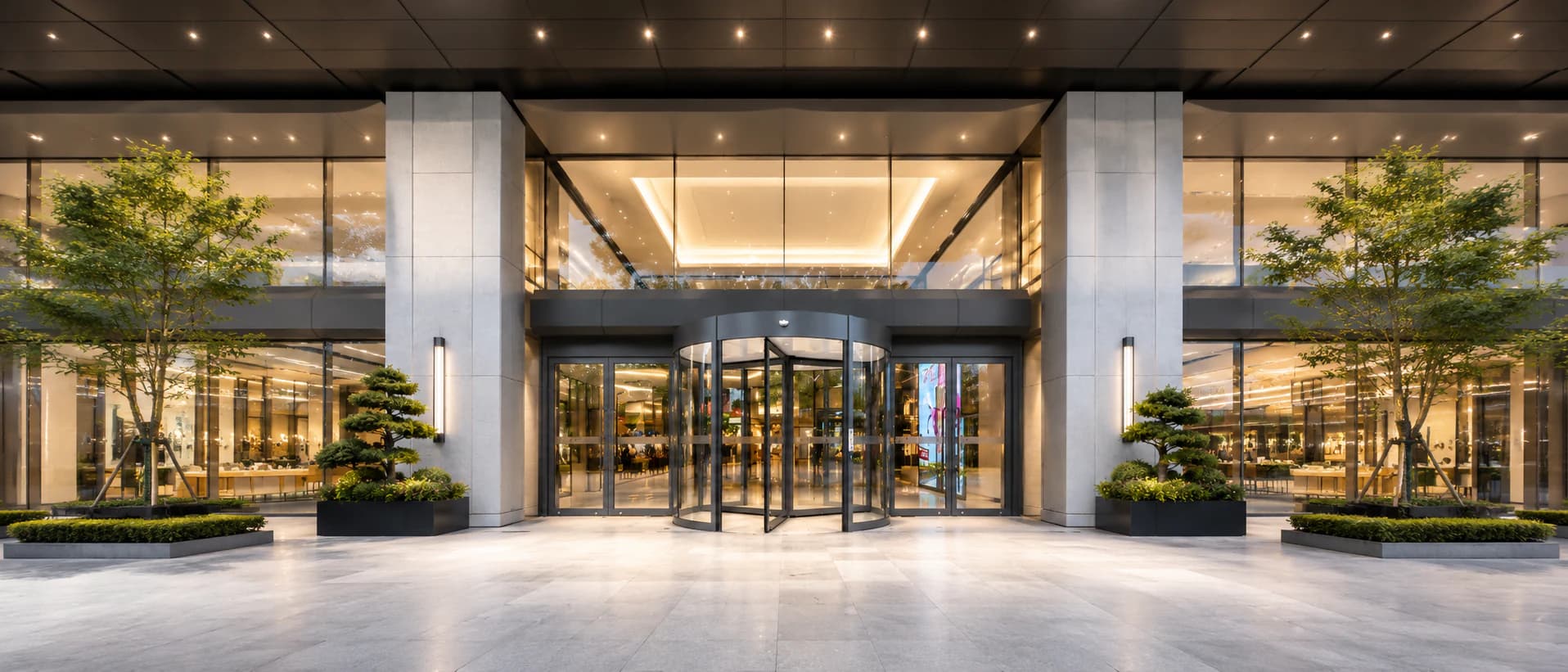
The documented hotel lobby revolving-door project includes a customized canopy, enclosure, curved glass and coordinated entrance hardware. That case illustrates the scope to describe when requesting a quotation; it does not provide a transferable price for another entrance.
Drive, Safety Detection and Access-Control Scope
Compare the automation as a coordinated system. Door movement, sensing and connected building controls need compatible functions and a clear division of responsibility.
Define the drive package around the door
Automatic revolving door operators must be selected with the rotating structure, intended use and control functions in view. A quotation for a drive assembly needs an explicit component list. The complete entrance also needs its door body, enclosure, glazing and agreed interfaces.
Tell the supplier about concentrated arrival periods, the entrance's role and requested operating modes. Ask the proposal to name the drive, controller and included controls, together with the assumptions used for selection. Comparing motor descriptions alone leaves much of the system unexamined.
Describe monitored areas and expected responses
Activation and safety detection perform different jobs. One requests movement; the other contributes information about occupied or obstructed areas. The actual entrance geometry, user routes and controller determine the devices, mounting positions and response logic that need review.
Ask what the sensor package covers and who will verify the installed detection zones and controller responses. A different sensor count may reflect a different layout or scope. Required protection should remain part of the defined entrance when comparing budget alternatives.
Name the boundary with access control
Reception release, after-hours access and building signals introduce work across several parties. An access-control interface on the door does not establish whether the price includes readers, locks, interface modules, field cabling or programming of the building system.
Write down the intended operating sequence and ask who supplies, connects and tests each part. If those decisions remain open, have the supplier identify the assumption and quote the unresolved work separately where practical.
Use the revolving-door safety review to discuss users, monitored areas and verification responsibilities. The door systems overview explains how component supply relates to a complete entrance package.
Site Work, Installation and Delivery Responsibilities
The equipment quotation is one part of the entrance budget. Confirm the work needed before delivery, during installation and at handover so each party can price its responsibilities.
Floor, supports and facade junctions
The revolving enclosure needs a coordinated floor and supporting construction. Floor levels, fixing details, waterproofing, drainage where required and the facade junction can all affect the work around the supplied door. A replacement entrance also needs a survey of the retained structure and existing services.
Show any adjacent accessible or large-item route on the same entrance plan. If that route requires a separate door or additional building work, identify whether it sits within this quotation or another package. The overall entrance budget needs to account for both.
Installation and commissioning
Installation costs depend on the work assigned to the local project team, including equipment access, lifting, assembly, glazing and electrical connections. Commissioning also needs an agreed scope for settings, operating modes, sensing and connected systems.
SEPPES provides remote online installation guidance and remote troubleshooting. Your quotation should identify the local party responsible for installation and site testing, together with any agreed remote support. Include that local work in the project budget when it falls outside equipment supply.
Quantity, packaging and destination
For several entrances, list the quantity of each configuration and distinguish repeated details from unique ones. Different diameters, finishes or control sequences can require separate drawings, approvals and package identification even within one order.
Curved glass, frames and canopy components need a defined packing and delivery plan. Compare the delivery destination, shipment grouping, transport inclusions and unloading responsibility. Ask whether customs clearance, import charges and local transport are included or budgeted by your team; use the agreed delivery terms to establish the boundary.
How to Compare Automatic Revolving Door Quotes
Review the automatic revolving door price alongside the drawing revision, equipment list and commercial terms. For every line below, record each supplier's stated inclusion, exclusion or open assumption. Leave an unanswered item open until the responsible party clarifies it.
For example, one offer might include the curved glass and protective packaging while another assumes local glazing. To compare the entrance budget, add the separately quoted local work to the relevant proposal. Keep the original equipment prices visible so the difference remains traceable.
| Quotation item | Compare on the same basis | Question to resolve |
|---|---|---|
| Geometry | Diameter reference, clear height, canopy height, throat opening and wing arrangement. | Does each supplier use the same plan and elevation revision? |
| Door body and glass | Rotating assembly, curved enclosure, canopy, glazing, frames and visible finishes. | Which parts will the factory supply, and which will a local contractor provide? |
| Drive and controls | Operator, controller, operating modes, activation devices and selected control interfaces. | Is the offer for a complete door, an automation package or selected components? |
| Safety detection | Monitored areas, devices, mounting provisions and agreed controller responses. | Who confirms the layout and verifies the installed system? |
| Access integration | Signal interface, readers, locks, cabling, programming and joint testing. | What does each supplier mean by 'access-control ready'? |
| Site and adjacent work | Supports, floor preparation, waterproofing, power, facade junctions and any separate passage door. | Which costs sit in another contractor's package? |
| Installation and handover | Unloading, lifting, assembly, glazing, commissioning, documentation and agreed guidance. | Who performs the local work, and what support is included? |
| Commercial basis | Quantity by door mark, currency, quotation validity, delivery terms, destination and stated exclusions. | Are freight, import charges, local transport and provisional items treated consistently? |
| Service provisions | Access for maintenance, identified spare parts, service documents and support arrangements. | Which items belong to initial supply, and which need a separate ongoing budget? |
On a narrow screen, scroll the table horizontally to read all three columns.
Ask suppliers to separate proposed design alternatives from the agreed base scope. If the budget needs adjustment, review the architectural finish, dimensions that remain flexible and optional functions with the project team. Check how each change affects passage, sensing and site work before accepting a revised total.
Maintenance and Future Replacement Costs
Allow for ongoing inspection, cleaning, servicing and replacement parts as a separate operating budget. Ask how technicians will reach the drive, controller and sensors once the ceiling, canopy and surrounding finishes are complete. Restricted access can change the work required for a later service visit.
Request the relevant maintenance instructions and identify the party who will service the installed entrance. Ask which replacement parts the supplier can provide and what information will identify them correctly. SEPPES offers replaceable spare parts and remote troubleshooting; local service arrangements need their own scope.
For a refurbishment, review the condition and compatibility of retained components before assigning a saving to reuse. A matching opening dimension does not establish that existing glass, fixings or controls suit a new system.
If the building team wants to evaluate energy costs, ask it to assess the entrance within the actual climate, traffic pattern, operating schedule and adjacent routes. Use those project assumptions for any calculation. A generic savings percentage or payback period cannot establish the result for your building.
Questions About Revolving Door Pricing
Why do quotes differ for revolving doors with the same diameter?
The suppliers may have allowed for different heights, wing layouts, glass, finishes, controls or site responsibilities. Check whether both diameters use the same measurement reference, then compare the equipment lists and exclusions against one drawing revision.
Are two-wing revolving doors always more expensive?
No fixed price order follows from wing count alone. Diameter, central structure, glazing, drive arrangement and included functions all affect the quotation. Ask for the configuration differences before comparing totals.
Does the quoted price include installation and commissioning?
Only when the quotation expressly includes them. Confirm the local installation and commissioning party, electrical and glazing responsibilities, and the scope of any remote guidance. Include separately supplied site work in your project budget.
Can existing glass or entrance structures be reused?
Reuse needs a condition and compatibility review of the existing glazing, geometry, fixings, supporting structure and proposed system. Send drawings and site photographs for an initial review, then confirm the site findings before including a reuse allowance in the budget.
What information helps a supplier prepare a comparable quote?
Share the entrance plan and elevation, dimension references, wing-layout preference, expected users, glass and finish requirements, controls, quantity, destination and requested supply scope. Identify preliminary inputs and ask the supplier to list assumptions, exclusions and separately priced work.
Prepare a Quotation That Your Project Team Can Compare
Send the entrance plan and elevation, building use, dimension references, preferred wing layout, finish direction, control needs, quantity and delivery location. Include any retained construction or locally supplied work. Mark preliminary dimensions so the supplier can state the assumptions behind its proposal.
SEPPES can review the requested entrance and supply scope with you. Use the automatic door quote preparation guide to organize the available information, then ask for a proposal that identifies equipment, interfaces, exclusions and the responsibilities of each project party.